Water Extraction in Lake Elsinore, CA
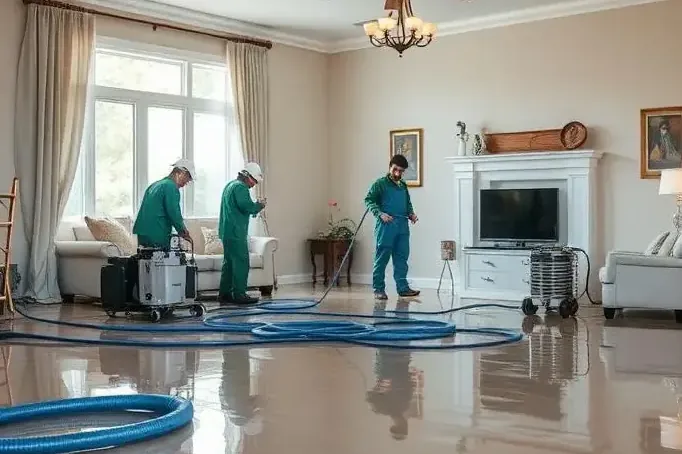
Heavy rain can leave standing water in homes near the lake and the San Jacinto River floodway. Pumps and extraction wands pull it out before it wicks into walls and subfloors.
(888) 450-9281Bring in the extraction pumps- Pumps and wands
- Moisture mapping
- Claim photo records
- Best for
- Standing water indoors
- Gear
- Pumps, wands, meters
- First move
- Stop the source
- Finish
- Dry readings logged
First steps for water extraction and removal in Lake Elsinore
- 1Stop the source
Close the shutoff valve or confirm rain has stopped entering the house.
- 2Pump it out
Portable and truck-mounted pumps remove bulk water from the lowest areas first.
- 3Extract the rest
Wands pull water from carpet, tile and corners that pumps cannot reach.
- 4Map the moisture
Meters and thermal cameras show what stayed wet so drying starts in the right place.
How water extraction and removal is handled
Clean water spills
Supply pipe breaks, overflowing tubs and rain through a leak are removed before they turn gray and spread to more materials.
Rain and runoff water
Storm water that reaches floors from doors, vents or low grading is pulled out, and the entry point is noted for the repair.
Water under flooring
Water that slipped beneath laminate, tile or cabinets is located with meters and extracted through small access openings.
What does water extraction and removal cost in Lake Elsinore, CA?
Water extraction runs from about $500 for a small clean-water spill to $6,000 for gray or black water spread through a home. Cost follows the area wet, the water category and how long it sat before extraction began.
Small clean-water spill
- One room or less
- Pumps and wands
- Fans for a day or two
Several wet rooms
- Multiple rooms affected
- Carpet pad removal
- Full moisture mapping
Gray or black water spread
- Protective gear required
- Porous materials removed
- Disinfecting steps added
Ranges only, not a quote. The drivers are the water category, the square footage, the material class and how fast drying started. For a planning number, run the water damage cost calculator.
The water extraction and removal process, step by step
Truck-mounted and portable pumps remove standing water from floors and carpet, then moisture meters map what stayed wet so drying can target the right rooms.
- 1
Dispatch
The call is logged with the water source, affected rooms and access details, and the crew loads pumps, wands and meters to match.
- 2
Assessment
A walkthrough finds the source and measures how far the water traveled, and photos record the starting condition. The crew also notes outlets, appliances and furniture that sit in the wet zone.
- 3
Extraction
Bulk water comes out first, then wands and small pumps clear carpet and the corners where it hides.
- 4
Handoff to drying
Once standing water is gone, readings set the drying plan, and the crew explains next steps and timing in plain terms. The dry-down plan is written up.
In Lake Elsinore, standing water usually comes from heavy rain, a failed supply pipe or overflow from the lake and river. The longer it sits on a floor, the further it wicks into baseboards, drywall and the padding under carpet. Crews treat the first hours as the window to limit what has to be torn out.
How extraction works
Crews start by confirming the water source is off, then work from the deepest area outward. Portable pumps handle shallow water, while truck-mounted units move large volumes quickly. Wands finish carpet and tile, and moisture meters show where water slipped under cabinets or into the bottom of a wall. On carpeted floors the pad is checked first, because it holds water long after the surface feels dry.
- Standing water pumped from floors and low spots
- Carpet and pad lifted when the pad cannot dry in place
- Wet baseboards pulled to release trapped moisture
- Readings taken in walls, floors and cabinets
- Photos and notes saved for the adjuster before drying equipment goes in
Water near the lake and river floodway
The shallow lake sits at the lowest point of the San Jacinto River watershed, and the river empties into it after flowing southwest from Canyon Lake. Homes in Riverview, between a knoll, the floodway and the lake, can collect runoff after a storm. Fast extraction matters there because soaked ground keeps feeding moisture back toward the structure. That is why crews check low-lying rooms and garages first, then follow the water toward the rest of the house.
Why speed matters. Water that sits on a floor for a day or two can turn clean water into gray water, which raises both the cleanup scope and the cost. Mud and silt left behind add to that.
What to do before the crew arrives
Turn off the supply valve if a pipe is the cause, switch off power to wet rooms if it is safe, and lift small items off the floor. Take photos of the water and the damage before anything is moved, since those images support the claim. Setting furniture legs on foil or blocks keeps stains from spreading into wet carpet.
Water extraction and removal across Lake Elsinore and nearby cities
The same service nearby: water extraction and removal in Wildomar, Menifee, Murrieta.
Extraction crews work across the city, from the lake shore and Riverview to Tuscany Hills, Canyon Hills and Rosetta Canyon, and along Grand Avenue, Mission Trail and Railroad Canyon Road.
Water damage restoration in Lake Elsinore · every town covered
Water Extraction and Removal questions
Standing water in the house? Describe it to a restoration pro and get a clear plan.
Ask about pump-out optionsHow quickly should extraction begin after water gets in?
As soon as the source is controlled, because water soaks into drywall, padding and subfloors fast. Starting early keeps clean water clean and cuts the amount of material that has to be removed.
Can I extract the water myself with a wet vac?
A wet vac handles a shallow spill, but it cannot pull water from under cabinets or out of padding and wall bottoms. Meters are needed to see what stayed wet, and hidden moisture keeps damaging the structure.
Does carpet have to be thrown out after a flood?
Not always. Clean water on carpet caught early can often be extracted and dried in place, though the pad usually comes out, and carpet touched by gray or black water is generally removed.
Is rain or lake water treated differently from pipe water?
Yes. Water from outside carries silt and bacteria, so it is handled as contaminated, with protective gear, removal of porous materials and cleaning of every surface it touched.
What if the water is already several days old?
Older water has often gone gray, and materials may be swollen or stained. Extraction still comes first, followed by a wider search for hidden damage and a longer drying plan.
Will extraction be documented for my insurance company?
Photos, moisture readings and notes on the source and equipment are saved from the first visit, so the adjuster can see the condition before and after the work.
Do crews work nights and weekends?
Water damage does not follow business hours, so dispatch stays open every hour of every day, including holidays, and the extraction crew can be reached the same way.
Get the water out before it spreads
Describe the loss to dispatch and a crew will bring the pumps, wands and meters the job needs. Photos from the first visit go straight into the claim file.