Storm Water Damage in Lake Elsinore, CA
Wind-driven rain and runoff can get in through doors, windows, vents and foundations. Crews remove the water and mud, dry what is left and check whether the storm hurt the structure itself.
(888) 450-9281Get storm cleanup started- Water and mud removal
- Structural checks
- Entry points noted
- Cause
- Rain, runoff, wind
- Often found
- Mud and debris
- Check
- Structure and entry points
- Drying
- Walls, floors, ceilings
First steps for storm water damage in Lake Elsinore
- 1Make it safe
Power to wet outlets is shut off, and hazards from debris are noted.
- 2Clear water and mud
Pumps, shovels and wet vacs remove water, silt and debris from the rooms.
- 3Find the entry
Meters and a walkthrough trace where the storm water got into the structure.
- 4Dry and record
Equipment runs until readings are dry, and photos back up the claim.
How storm water damage is handled
Rain through doors and windows
Water that came in at thresholds and frames is extracted, and wet trim, drywall and flooring are dried or removed.
Runoff and mud
Silt and debris that washed against or into the house are removed before they can hold moisture against the walls.
Structural concerns
Cracks, shifted framing and damaged utilities are flagged for the right trade after a severe storm.
What does storm water damage cost in Lake Elsinore, CA?
Storm water damage commonly runs $1,200 to $12,000. Mud and runoff that crossed a yard and carried contamination into the house push a job into the top tier. Cost follows the number of rooms wet and the cleanup scope.
One entry, one room
- Single entry point
- Water extraction
- Short drying run
Several rooms wet
- Multiple rooms
- Wall and floor drying
- Wet materials removed
Runoff with contamination
- Mud and silt removal
- Porous materials discarded
- Cleaning and disinfecting
Ranges only, not a quote. The drivers are the water category, the square footage, the material class and how fast drying started. For a planning number, run the water damage cost calculator.
The storm water damage process, step by step
Storm crews pull rain and runoff out of the house, clear mud and debris, and dry the structure while noting exactly how the water got in.
- 1
Dispatch
The caller describes where the water entered and how deep it got, and the crew loads pumps, mud tools and meters.
- 2
Safety check
Power, gas and debris hazards are looked at first, and photos record the storm damage before anything is moved.
- 3
Cleanup
Water comes out first, then mud and debris, and wet insulation or drywall is cut out where it cannot dry.
- 4
Drying and records
Air movers and dehumidifiers run until readings match dry reference, and the entry points go into the written report.
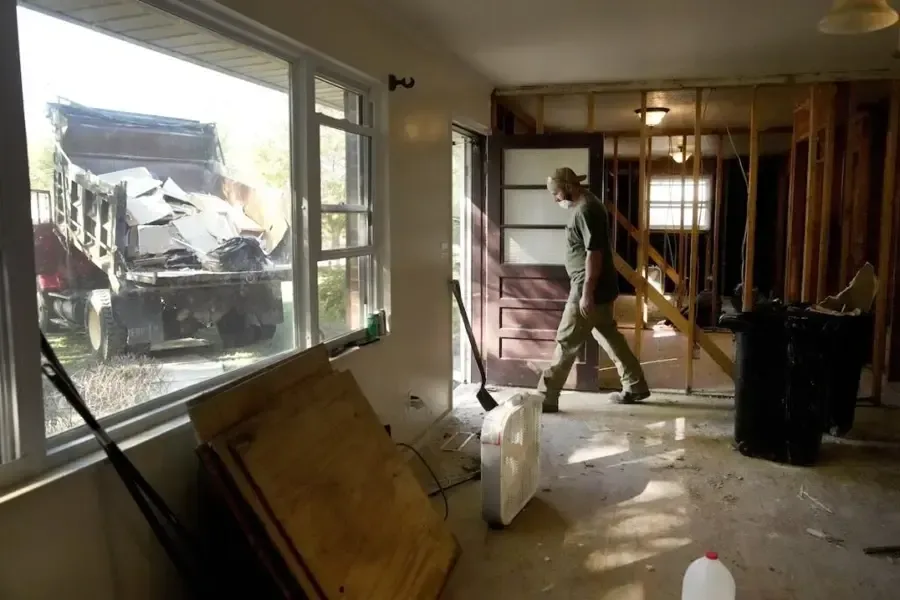
Storm damage is rarely just water. In Lake Elsinore, heavy rain can bring runoff, mud and debris along with the water, and the cleanup has to cover all three before drying can begin. Photos of the original condition come first.
When a storm does more than wet the floor
In February 2019 a rain-swollen creek eroded land behind a home near the Holy Fire burn area. A neighbor's brick wall crumbled, crews cleaned up mud and debris flows, and one home was red tagged as uninhabitable. Storms here can end in structural harm, not only a wet carpet, and that is the range storm cleanup has to be ready for.
- Water and mud removed from rooms and garages
- Debris cleared so crews can reach wet materials
- Wet insulation, drywall and carpet pad tested and removed as needed
- Doors, windows and vents checked as possible entry points
- Photos and notes kept for the adjuster, including any sign of structural movement
How storm water gets inside
Water enters in more places than most owners expect: under door thresholds, around window frames, through attic vents, along roof flashing and up through cracks where the ground is saturated. Crews trace the path with moisture meters, because the stain on a wall is often far from the opening. Noting the entry point matters for the repair and for the claim. Gutters, downspouts and grading that send water toward the foundation are worth a look as well.
Mud counts. Silt and mud left behind can hold moisture against walls and flooring, so it is removed before drying equipment is set up. Wet mud also leaves odors if it sits.
After the rain stops
Once standing water is out, dehumidifiers and air movers dry walls and floors, and readings continue until every material matches the dry reference. Any sign of shifted framing, cracked masonry or damaged utilities is flagged so the right trade can inspect it before repairs begin. Dry-down progress is recorded at every visit.
Storm water damage across Lake Elsinore and nearby cities
The same service nearby: storm water damage in Wildomar, Menifee, Murrieta.
Storm cleanup covers the lake shore, Riverview and the hillside neighborhoods of Tuscany Hills, Canyon Hills and Rosetta Canyon, plus homes along Railroad Canyon Road and State Route 74.
Water damage restoration in Lake Elsinore · every town covered
Storm Water Damage questions
Storm water in the house? Describe the damage and get a plan.
Ask about storm cleanupIs storm water considered contaminated?
Often yes. Runoff crosses yards, roads and soil before it reaches a house, so it can carry bacteria and silt. Porous materials it touched are usually removed instead of dried.
Can storm damage be a structural problem?
Yes. After a severe storm, crews watch for shifted framing, cracked masonry and damaged utilities, and flag anything that needs a builder, engineer or utility to take a look.
Should I wait for the rain to stop before calling?
No. Water that is already inside keeps spreading, so extraction can begin while the storm is still passing, as long as the crew can work safely.
What if the water came through the roof?
That follows the same drying steps, with an added attic check. The roof leak page covers the ceiling and insulation side in more detail.
Will my policy cover storm water?
Policies often separate water from rising flood and water from wind-driven rain, so the cause matters. Photos, meter readings and entry point notes help the adjuster sort that out.
How is mud removed from flooring?
Loose mud is shoveled and vacuumed, then hard floors are washed and disinfected. Carpet and pad that took in muddy water are usually removed instead of cleaned.
Do crews document storm damage for the claim?
Yes. Dated photos, moisture readings, notes on the entry points and a list of removed materials are saved from the first visit and passed along to the adjuster.
Get ahead of the next downpour
Describe what the storm did and dispatch will line up pumps, mud removal and drying equipment. Entry points and damage are photographed for the claim file.