Roof Leak Water Damage in Lake Elsinore, CA
A stain on the ceiling after a storm often means water got past flashing, a vent or a worn section of roof. Crews dry the ceiling, insulation and walls that the leak reached.
(888) 450-9281Describe the ceiling stain- Ceiling and attic drying
- Wet insulation removed
- Leak path traced
- Clue
- Ceiling stain or drip
- Path
- Roof, attic, ceiling
- Crew job
- Drying and cleanup
- Roofer job
- Sealing the leak
First steps for roof leak water damage in Lake Elsinore
- 1Find the stain
A walkthrough marks every ceiling and wall that shows water.
- 2Check the attic
Meters and thermal images show how far the water traveled above the ceiling.
- 3Remove wet material
Soaked insulation and sagging drywall are removed so the area can dry.
- 4Dry and verify
Air movers and a dehumidifier run until every reading is dry.
How roof leak water damage is handled
Ceiling stains and sags
Drywall that is stained, bubbling or sagging is dried in place when it can be saved and cut out when it cannot.
Soaked attic insulation
Wet insulation holds water against joists, so it is removed and the framing dried first.
Water in the walls below
Water that ran down into wall cavities is traced with meters, and the lower walls are opened where moisture is trapped.
What does roof leak water damage cost in Lake Elsinore, CA?
Roof leak water damage commonly runs $1,000 to $12,000. A single ceiling stain stays near the bottom, and a leak that ran for weeks through insulation and several rooms reaches the top.
One ceiling stain
- Single ceiling area
- Insulation checked
- Short drying run
Several rooms below
- Multiple rooms affected
- Wet insulation removed
- Wall cavities dried
Long-running roof leak
- Weeks of seepage
- Framing and decking dried
- Extended monitoring
Ranges only, not a quote. The drivers are the water category, the square footage, the material class and how fast drying started. For a planning number, run the water damage cost calculator.
The roof leak water damage process, step by step
Roof leaks soak attic insulation, ceilings and walls below, so crews trace the water path and dry each layer while a roofer seals the leak.
- 1
Call
The caller describes the stain and when the rain fell, and the crew plans an attic check along with the ceiling work. Access to the attic is arranged.
- 2
Inspection
Meters and a thermal camera map wet ceilings, walls and insulation, and photos record the damage before removal.
- 3
Removal and drying
Sagging drywall and soaked insulation come out, and air movers and dehumidifiers dry what remains.
- 4
Closeout
Final readings confirm dry reference, and the report notes where the water entered so the roofer can repair it. Final photos are saved.
Heavy storms are the main local water event, so a roof or flashing leak is worth checking after rain. In Lake Elsinore, a small stain on a ceiling can mean a much wetter attic above it. Looking early limits how far the water spreads.
Where roof water goes
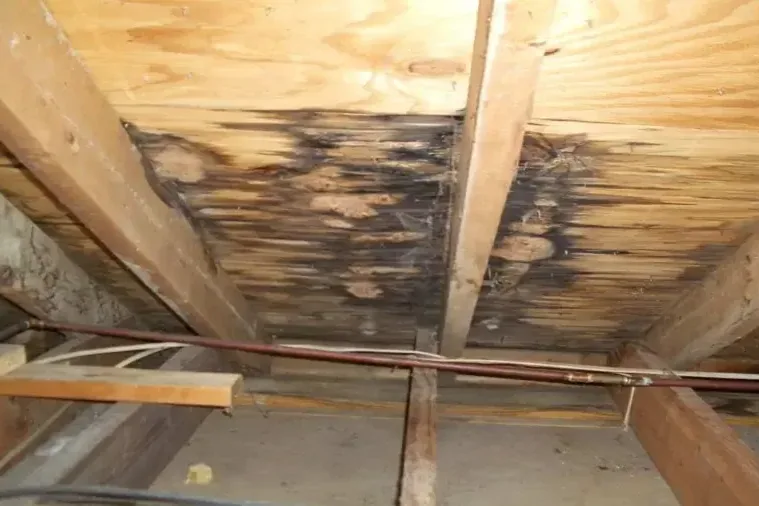
Water that gets past the roof covering runs along decking and rafters, soaks insulation and finally shows at a ceiling seam or light fixture. By then the attic may hold far more water than the visible stain suggests. Crews check the attic space, the ceiling and the walls below with meters and thermal imaging. Water can also follow nails, pipes and wiring through the ceiling, which is why the wet spot is not always under the leak.
- Ceiling drywall dried or cut out where it sags
- Wet insulation removed so the attic can dry
- Attic decking and framing checked for moisture
- Light fixtures and outlets in the wet area made safe
- Photos of the stain, attic and ceiling kept for the adjuster
Who fixes what
A roofer repairs the flashing, vent or roof covering, while the restoration crew handles the water that already got in. A temporary tarp from the roofer can stop new water during a storm, and the drying plan is timed so repairs do not seal damp materials inside the roof structure. Roofers also check flashing, vents and the roof covering so the next rain does not use the same path.
Check after the rain. Stains often appear a day or more after a storm, so look at ceilings and attics once the weather clears.
Hidden leaks and long-running damage
A slow roof leak can soak insulation and framing for weeks, with only a faint ring on the ceiling to show for it. Moisture readings in the attic and walls reveal the real scope, and the findings give the adjuster a clear picture of how far the damage spread. Insulation and drywall that stayed wet that long are normally replaced.
Roof leak water damage across Lake Elsinore and nearby cities
The same service nearby: roof leak water damage in Wildomar, Menifee, Murrieta.
Roof leak crews work across the city, from the older streets of the Historic and Business districts to the hillside homes of Tuscany Hills, Canyon Hills and Rosetta Canyon.
Water damage restoration in Lake Elsinore · every town covered
Roof Leak Water Damage questions
Ceiling stained or dripping? Describe it and get a plan for the dry-out.
Ask about attic dryingWhy is my ceiling stained when it is not raining?
Water can sit in attic insulation and drip out long after rain stops. A stain that grows or turns darker means the area above is still wet and needs checking.
Does wet attic insulation always have to be removed?
Usually yes for soaked batts or loose fill, since they hold water against the framing. Lightly damp insulation may dry in place, and meters show which is which.
Who should come first, a roofer or a restoration crew?
Both are needed. A roofer stops new water, and the restoration crew dries what got wet. If rain is still falling, a roofer's temporary cover helps protect the drying.
Can a ceiling be repaired instead of replaced?
Small stains on solid drywall often dry and can be sealed and painted. Sagging, bubbling or crumbling drywall is cut out and replaced after the area is dry.
Will my policy pay for roof leak damage?
Coverage depends on the policy and the cause. Sudden storm damage is treated differently from wear over time, so photos, readings and a record of when the leak started help.
Is it safe to turn on lights under a wet ceiling?
Not if water is dripping through a fixture. Switch off the circuit at the panel, keep people away from the sagging area and call for an inspection before power is restored.
Can mold form in a wet attic?
It can if insulation and decking stay damp for more than the first day or two, which is why wet attic materials are dried or removed promptly.
A stain overhead needs a look above it
Tell dispatch where the ceiling is stained and a crew will bring meters, a thermal camera and drying equipment. The attic findings go in the claim records.