Structural Drying and Dehumidification in Wildomar, CA
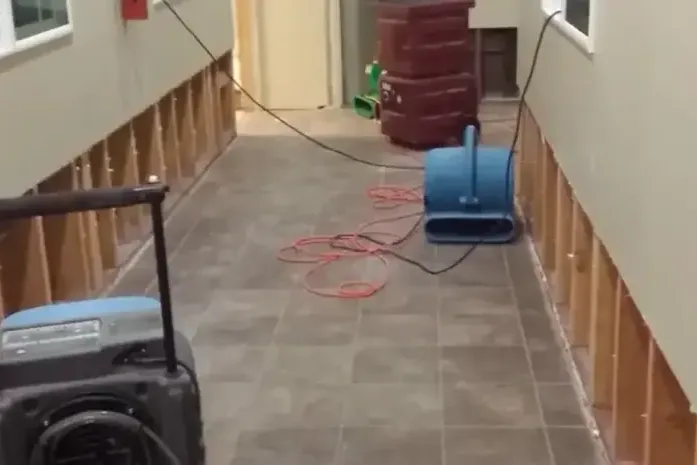
Structural drying in Wildomar, CA dries the building itself, not just the surface: framing, drywall, cabinets and concrete, with air movers and dehumidifiers running until the readings say dry.
(888) 450-9281Walls still wet inside? Call now- LGR and desiccant units
- Daily psychrometric logs
- Dry reference readings
- Applies to
- Category 1 to 3, after removal
- Class of loss
- 1 to 4
- Typical drying
- 3 to 7 days
- Drying standard
- IICRC S500
First steps for structural drying and dehumidification in Wildomar
- 1Leave the equipment running
Turning off air movers or dehumidifiers overnight slows drying.
- 2Keep doors and windows closed
The dehumidifiers work best in a closed space.
- 3Do not repaint or refloor yet
Sealing a wet wall or slab traps the water inside.
- 4Note any new smell or stain
Tell the drying team at the next reading.
How structural drying and dehumidification is handled
Equipment sized to the class
The drying team picks air movers and dehumidifiers for the class of loss and the materials that got wet.
Readings every day
Temperature, humidity, grains per pound and material readings are logged on every visit.
Out only when dry
Equipment comes out when readings match a dry reference, not on a set date.
What does structural drying and dehumidification cost in Wildomar, CA?
Structural drying here typically runs $1,000 to $8,000, depending on the class of loss, how many rooms and materials are wet, how many days the equipment runs and whether desiccant drying is needed for concrete or hardwood.
Class 1 or 2, one area
- Several air movers
- One LGR dehumidifier
- Three days of readings
Class 3, several rooms
- Wall cavity drying
- Multiple LGR units
- Daily psychrometric logs
Class 4, dense materials
- Desiccant dehumidifiers
- Slab and hardwood drying
- Extended monitoring
Ranges only, not a quote. The drivers are the water category, the square footage, the material class and how fast drying started. For a planning number, run the water damage cost calculator.
The structural drying and dehumidification process, step by step
Structural drying and dehumidification in Wildomar, CA: air movers, LGR and desiccant dehumidifiers, moisture mapping and daily psychrometric logs until materials reach a dry reference.
- 1
Map the moisture
The tech who does the walkthrough maps every wet material with pin and pinless meters and a thermal camera, and picks a dry reference in the same building.
- 2
Set the equipment
The drying team places air movers to the evaporation load of each room and sizes LGR or desiccant dehumidifiers to the class of loss.
- 3
Log and adjust daily
Each visit records temperature, humidity, grains per pound and material readings, and equipment moves to wherever the readings stay high.
- 4
Verify dry
Equipment comes out when every material sits within 2 to 4 points of the dry reference, and the logs go into the claim file.
Structural drying is the part of water damage restoration that takes the longest and matters the most. A wall can look dry on the surface while the bottom plate, the insulation and the drywall behind the baseboard still hold water, and that hidden water is what causes swelling, odor and the 24 to 48 hour growth window.
How structural drying is set up
The drying team sizes the equipment to the class of loss. Class 1 is a small, low-absorption area; Class 4 means dense materials like concrete, hardwood and plaster that need desiccant or low-grain dehumidification. Equipment used:
- Air movers set to each room's evaporation load
- LGR dehumidifiers that pull water out of the air
- Desiccant dehumidifiers for dense Class 4 materials and slabs
- Wall cavity and under-cabinet drying systems
- HEPA air scrubbers on contaminated losses
- Floor drying mats for hardwood that cupped from water underneath
Structural drying in local slab homes
Many homes from the growth years along Clinton Keith Road, Bundy Canyon Road and in Sedco Hills sit on concrete slabs with drywall and stucco walls. Water that reaches the slab soaks the bottom plates and wall bottoms first, so baseboards come off and cavities get airflow. Dry inland air helps evaporation, but storm season adds humidity the dehumidifiers have to remove, and homes near Murrieta Creek that took flood water need the contaminated materials out before drying starts.
The drying goal: wet materials are dry when readings sit within 2 to 4 points of a dry reference material in the same building. Equipment stays until that goal is met, not until a set number of days passes.
Structural drying records for the claim
Every day the drying team logs temperature, relative humidity and grains per pound, plus moisture readings on each wet material. Those psychrometric logs, the moisture map and the photos go into the claim file. The National Institute of Environmental Health Sciences covers indoor air after water damage, and Energy Saver covers humidity and home moisture. The drying time estimator gives a rough day count.
Structural drying and dehumidification across Wildomar and nearby cities
Nearby coverage reaches Murrieta, Lake Elsinore, Canyon Lake, Menifee, Temecula, Moreno Valley.
Crews cover the whole 92595 ZIP: the original townsite around Central Avenue, Sedco Hills, the homes off Clinton Keith Road and Bundy Canyon Road, and the low ground along Murrieta Creek.
92595
Structural Drying and Dehumidification questions
Something still reads wet? In Wildomar, the drying team works 24/7.
Ask about the moisture readingsWhat is structural drying?
Drying the building itself, framing, drywall, subfloor, cabinets and concrete, not just the surface. It uses air movers and dehumidifiers sized to the loss, with daily readings until materials reach a dry reference.
How long does structural drying take in Wildomar?
Most losses dry in three to seven days. Concrete, hardwood and plaster take longer, and the equipment stays until the readings say dry.
Why is structural drying equipment so loud?
Air movers push large volumes of air across wet surfaces to speed evaporation, and dehumidifiers run compressors around the clock. Turning them off slows the drying.
What does a dry reference mean in structural drying?
A reading taken on the same kind of material in an unaffected part of the building. Wet materials are dry when they read within 2 to 4 points of it.
Can I run my own fans instead of structural drying equipment?
Household fans move air but do not remove water from it, and they cannot dry wall cavities or concrete. LGR and desiccant dehumidifiers pull the water out.
What is the difference between LGR and desiccant dehumidifiers?
LGR units cool air to condense water and work well in most rooms. Desiccant units use a drying wheel and work better on dense materials and slabs.
Is structural drying documented for insurance?
Yes. Daily psychrometric logs, material readings, the moisture map and photos show the adjuster what was wet and when it reached dry.
Walls look dry but read wet? Call.
Hidden water in framing and concrete keeps causing damage after the surface dries. The drying team dries it to a measured goal.