Storm Water Damage in Wildomar, CA
When a winter storm in Wildomar, CA pushes rain past doors, windows and stucco, the restoration team extracts the water, dries the walls and floors from the inside and documents the loss for the claim.
(888) 450-9281Rain through the slider? Call- Wind-driven rain drying
- Wall cavity readings
- Runoff entry mapped
- Water category
- 1 to 2, rain entry
- Class of loss
- 2 to 3, walls and floors
- Typical drying
- 3 to 5 days
- Drying standard
- IICRC S500
First steps for storm water damage in Wildomar
- 1Block the entry
Towels or a temporary barrier at the door or window slow new water.
- 2Move items off wet floors
Lift rugs, electronics and boxes before the water wicks up.
- 3Photograph the entry point
Shoot the door, window or stucco where the water came in.
- 4Call before walls soak
Water inside a wall cavity keeps spreading until it is dried.
How storm water damage is handled
Entry point identified
The restoration team confirms whether rain came through the envelope or rose from outside, which sets the category.
Walls checked behind the leak
Meters and thermal imaging find water inside the cavity behind a door frame or window.
Dried, not torn out, when possible
Clean rain water caught early is dried in place with air movers and LGR dehumidifiers.
What does storm water damage cost in Wildomar, CA?
Storm water damage here typically runs $1,200 to $6,000, depending on how many rooms got wet, whether water reached inside the walls and how long it sat before drying started. Roof, window or stucco repair is separate.
One entry, one room
- Floor extraction
- Pad pulled where soaked
- Wall cavity readings
Several rooms wet
- Flood cuts behind entries
- Wet insulation removed
- Multiple dehumidifiers
Runoff with contamination
- Category 3 protocol
- Porous materials removed
- Containment and drying
Ranges only, not a quote. The drivers are the water category, the square footage, the material class and how fast drying started. For a planning number, run the water damage cost calculator.
The storm water damage process, step by step
Storm water damage restoration in Wildomar, CA: wind-driven rain and hillside runoff entering through doors, windows, stucco and garages, extracted, dried and documented.
- 1
Find the entry
The tech who does the walkthrough traces where the rain got in and maps the wet area behind it with meters and a thermal camera.
- 2
Extract and lift
The extraction crew pulls water off the floor and removes soaked carpet pad so the subfloor or slab can start drying.
- 3
Open the wet walls
The restoration team makes small openings or flood cuts behind the entry point when readings show the cavity holds water.
- 4
Dry and log
The drying team runs air movers and LGR dehumidifiers, takes daily readings and keeps equipment until the walls match a dry reference.
Storm water damage is rain that gets inside: through a sliding door track, around a window, through cracked stucco or under a garage door. It is different from flood water rising from outside, and it is usually dried rather than torn out when the crew gets to it quickly.
How storm water damage gets into local homes
Heavy winter storms have hit this valley for as long as records go back: in the winter of 1883 to 1884 rains washed out the railroad through town, and in 1980 more than a week of rain flooded Lake Elsinore. Homes on the sloped lots off Bundy Canyon Road and in Sedco Hills see runoff run downhill toward the house, while homes on flat ground near Murrieta Creek see water pond against walls. Typical entry points:
- Sliding door tracks and thresholds that fill and spill inward
- Window frames and stucco cracks on the wind-facing wall
- Garage doors facing uphill driveways
- Roof valleys and flashing overwhelmed by heavy rain
- Weep screeds and foundation edges where runoff ponds
- Low patio slabs that slope toward the house instead of away from it
How storm water damage is dried
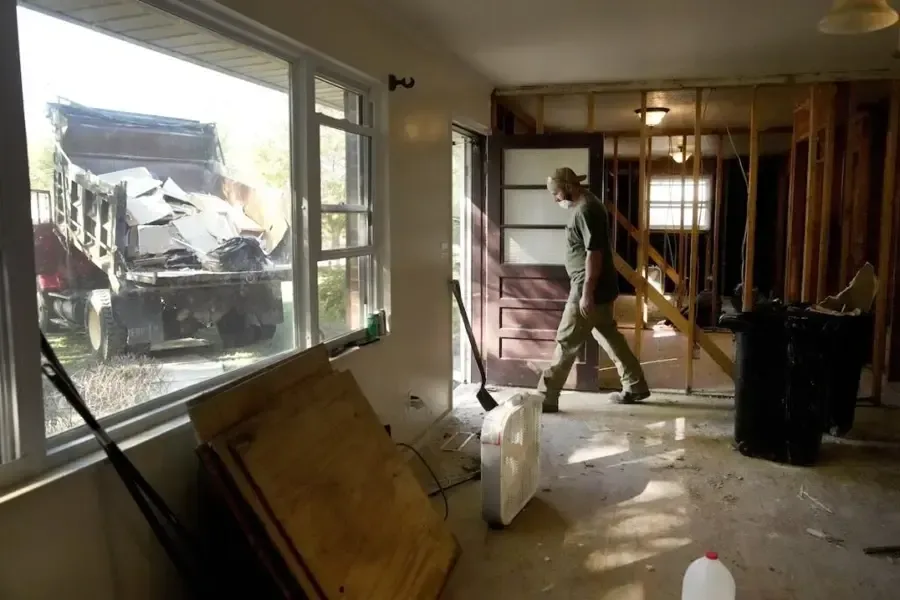
The restoration team extracts water from floors, pulls wet carpet pad and checks the wall cavities behind the entry point with meters and a thermal camera. Insulation and drywall soaked from the outside often hold more water than the floor shows. Air movers and LGR dehumidifiers dry the structure, and readings continue until the walls match a dry reference.
Storm water or flood water? Rain that blows in or leaks through the envelope is usually treated as storm water. Water that rises from outside across the ground and into the home is flood water, handled as Category 3. See flood water cleanup.
Storm water damage, safety and the claim
Wind-driven rain and flood water are often treated differently by insurers, so the claim file notes how the water got in, with photos of the entry point. Ready.gov flood guidance covers storm safety, and FloodSmart explains what flood insurance covers when water rises from outside.
Storm water damage across Wildomar and nearby cities
Nearby coverage reaches Murrieta, Lake Elsinore, Canyon Lake, Menifee, Temecula, Moreno Valley.
Crews cover the whole 92595 ZIP: the original townsite around Central Avenue, Sedco Hills, the homes off Clinton Keith Road and Bundy Canyon Road, and the low ground along Murrieta Creek.
92595
Storm Water Damage questions
Storm still pushing water inside? In Wildomar, the restoration team dispatches 24/7.
Report where the rain got inWhat counts as storm water damage?
Rain that gets inside through doors, windows, stucco, the roof or under a garage door. Water rising from outside across the ground is flood water, handled as Category 3.
Is storm water damage covered by homeowners insurance?
Wind-driven rain entering through a damaged opening is often covered, while rising surface water usually needs flood insurance. Coverage depends on your policy, so check with your own insurer.
How long does storm water damage take to dry in Wildomar?
Usually three to five days for walls and floors caught early. Soaked insulation, hardwood and stucco walls take longer, and readings decide when equipment leaves.
Why does storm water show up far from the door or window?
Water runs inside the wall cavity and along the slab before it surfaces. A thermal camera and meters trace it so nothing wet gets sealed in.
Do walls have to be opened after storm water damage?
Only where readings show water trapped in the cavity. Small access holes or a flood cut let air reach the framing and insulation.
What should be fixed after storm water damage is dried?
The entry point: door thresholds, window seals, stucco cracks, flashing or grading. Drying a wall without fixing the entry invites the next storm in.
How do hillside lots add to storm water damage?
Runoff flows downhill toward foundations and garage doors. On sloped lots, water can enter at the low side of the house even when the roof holds.
Rain inside the walls? Call now.
Storm water inside a wall keeps spreading after the rain stops. The restoration team finds it, extracts it and dries the structure.