Water Extraction and Removal in Wildomar, CA
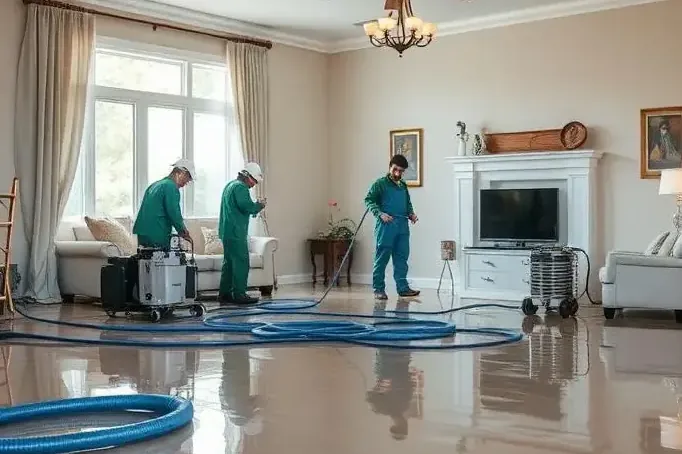
Standing water in Wildomar, CA gets pulled out with truck-mounted extraction before it wicks into baseboards, drywall and cabinet bases, so structural drying can start the same visit the source is stopped.
(888) 450-9281Standing water? Get it pumped out- Truck-mounted pumps
- Weighted carpet extraction
- Moisture map before drying
- Water category
- 1 to 3, set at the walkthrough
- Main equipment
- Truck-mounted extraction
- Typical first visit
- Extraction plus drying setup
- Drying standard
- IICRC S500
First steps for water extraction and removal in Wildomar
- 1Stop the source
Close the main valve or the shutoff behind the fixture so no new water feeds the spread.
- 2Kill power safely
Switch off circuits to wet rooms only if the breaker panel stands dry.
- 3Move what you can
Lift rugs, boxes and furniture legs off the wet floor and set them on blocks or foil.
- 4Call, then photograph
Call for extraction, then photograph every wet room before anything else moves.
How water extraction and removal is handled
Source and category first
The tech who does the walkthrough confirms where the water came from and sets Category 1, 2 or 3 before anything is pulled up.
Water out, not pushed around
The extraction crew removes water as liquid with truck-mounted or portable units instead of pushing it into the next room.
Readings decide the next step
Meters and a thermal camera map what is still wet so the drying plan matches the moisture, not the look of the floor.
What does water extraction and removal cost in Wildomar, CA?
Water extraction here typically runs $500 to $2,500 for one or two rooms of clean water, and more when the water is gray or black or spread under flooring on the slab. Extraction is usually billed with the drying that follows it, not on its own.
Small clean-water spill
- One room or hallway
- Surface and pad extraction
- Meter check of nearby walls
Several wet rooms
- Truck-mounted extraction
- Carpet pad pulled where needed
- Drying equipment set on the first visit
Gray or black water spread
- Category 2 or 3 protocol
- Porous materials removed
- Containment before extraction
Ranges only, not a quote. The drivers are the water category, the square footage, the material class and how fast drying started. For a planning number, run the water damage cost calculator.
The water extraction and removal process, step by step
Emergency water extraction and removal for homes and businesses in Wildomar, CA: truck-mounted and portable units, carpet and pad extraction, and moisture mapping ahead of structural drying.
- 1
Map the wet area
The tech who does the walkthrough maps moisture with pin meters and a thermal camera, so the extraction plan covers water hiding under tile and behind baseboards.
- 2
Extract the standing water
The extraction crew runs truck-mounted or portable units from the source outward, using weighted tools on carpet so the pad gives up its water too.
- 3
Remove what cannot dry
Pad, cove base or drywall that took Category 2 or 3 water comes out, while clean-water materials caught early stay in place for drying.
- 4
Set drying and log it
The drying team places air movers and LGR dehumidifiers to the evaporation load, then records readings daily until materials reach the dry goal.
Extraction is the step that decides how long everything after it takes. Every gallon the extraction crew pulls out as liquid is a gallon the dehumidifiers never have to pull out of the air, which is why the first visit concentrates on getting standing water out of the house fast and completely.
How water extraction works on tile, carpet and concrete
The crew starts at the source and works outward. Tile and sealed concrete get squeegee wands and floor tools, while carpet gets weighted extraction that presses water out of the pad instead of just skimming the surface. Low spots along baseboards and under toe kicks get checked with meters, because water hides where the floor dips.
- Truck-mounted units handle large volumes and exhaust outside the home
- Portable extractors reach upstairs rooms, apartments on Clinton Keith Road and tight closets
- Weighted tools pull water out of carpet pad that a wet vac leaves behind
- Pad that took Category 2 or 3 water comes out instead of being extracted
- Hard floors in garages and patios off Bundy Canyon Road get squeegee and pump work before the drying setup
Water extraction for local homes and slab floors
Much of the housing here went up during the growth after 1990, and a home built on a concrete slab gives water nowhere to drain. Water from a split supply pipe or a failed water heater spreads under laminate and tile across the slab, so the extraction crew lifts or drills where the meters show water trapped beneath the flooring. Homes near Murrieta Creek and Cole Creek that take on storm runoff get the same extraction, handled as Category 3.
Why speed matters: water wicks up drywall within hours, and moisture left in place for 24 to 48 hours is the usual window for mold growth. Extraction first, then drying, is the IICRC S500 order.
What happens after the water extraction
Once the floor is clear, the drying team sets air movers and LGR dehumidifiers to the room's evaporation load and starts daily readings. The structural drying page explains how the equipment is sized. For leak prevention tips, the EPA WaterSense program covers how to find household leaks, and Ready.gov flood guidance covers safety when water came from outside.
Water extraction and removal across Wildomar and nearby cities
Nearby coverage reaches Murrieta, Lake Elsinore, Canyon Lake, Menifee, Temecula, Moreno Valley.
Crews cover the whole 92595 ZIP: the original townsite around Central Avenue, Sedco Hills, the homes off Clinton Keith Road and Bundy Canyon Road, and the low ground along Murrieta Creek.
92595
Water Extraction and Removal questions
Water still on the floor? In Wildomar, the extraction crew dispatches 24/7.
Talk through the pump-outHow fast should water extraction start in Wildomar?
As soon as the source is stopped. Water wicks into drywall and cabinet bases within hours, and moisture that stays for 24 to 48 hours is the usual window for mold growth, so extraction is treated as urgent at any hour.
Can a shop vac do the same job as water extraction equipment?
A shop vac removes surface water from a small spill. Truck-mounted and weighted extraction tools pull water out of carpet pad and off large areas far faster, which shortens the drying time that follows.
Does carpet always come out after water extraction?
No. Carpet and pad wet with clean Category 1 water and extracted quickly can often be dried in place. Pad that took gray or black water, or sat wet for days, usually comes out.
Is water extraction different on a concrete slab?
Yes. A slab holds water at the surface and under flooring, so the crew checks under laminate, tile and pad with meters and lifts flooring where water is trapped. The slab itself then dries with dehumidifiers over several days.
What water extraction equipment is used?
Truck-mounted extraction units, portable extractors for upstairs and tight spaces, weighted carpet tools, squeegee wands for hard floors, and moisture meters plus a thermal camera to find what is still wet.
Is water extraction covered by homeowners insurance?
When the water came from a sudden and accidental source, such as a split supply pipe, extraction and drying are commonly covered after the deductible. Coverage depends on your policy, so check with your own insurer.
What happens after the water extraction is done?
Structural drying starts right away: air movers and LGR dehumidifiers run around the clock, and the drying team takes daily readings until materials sit within 2 to 4 points of a dry reference.
Standing water inside? Get it out now.
Every hour water sits, it climbs drywall and soaks deeper into flooring. The extraction crew pulls it out and sets drying the same visit.