Roof Leak Water Damage in Murrieta, CA
A roof leak soaks insulation, ceilings and walls long before it shows. The crew finds the wet path, removes what cannot dry and dries the attic and rooms below while the roofer repairs the opening.
(888) 450-9281Roof leaking? Call to dry it out- Attic and ceiling drying
- Insulation removal
- Rain claim records
- Water category
- 1 or 2
- Class of loss
- 2
- Typical drying
- 3 to 5 days
- Drying standard
- IICRC S500
First steps for roof leak water damage in Murrieta
- 1Catch the drip
Place a bucket and move furniture so the water does not reach floors.
- 2Relieve a bulge
Poke a small hole in a sagging ceiling to let trapped water out safely.
- 3Switch off lights
Turn off ceiling fixtures wired below wet drywall.
- 4Photograph the stain
Take dated pictures of the ceiling and any attic water you can see.
How roof leak water damage is handled
Wet path traced
Meters follow the water from the stain back to the roof opening, so the repair and the dry-out cover the same area.
Soaked parts removed
Insulation and swollen drywall are taken out, so they cannot keep holding moisture or sag onto the room below.
Dry-out recorded
Readings and photos document the loss from the first visit to the dry finish, giving the adjuster a full timeline.
What does roof leak water damage cost in Murrieta, CA?
Roof leak water damage in this area typically costs $1,000 to $12,000, driven by how many rooms sit below the leak, how long it ran and how much insulation and drywall needs replacing.
One ceiling stain
- Single room below
- Attic insulation out
- Small drywall repair
Several rooms below
- Water reached walls
- Wider drywall removal
- Added drying equipment
Long-running roof leak
- Slow repeated seepage
- Framing affected
- Long monitored drying
Ranges only, not a quote. The drivers are the water category, the square footage, the material class and how fast drying started. For a planning number, run the water damage cost calculator.
The roof leak water damage process, step by step
Roof leak water damage cleanup in Murrieta, CA: attic and ceiling moisture mapping, wet insulation and drywall removal, structural drying and documentation for the claim.
- 1
Inspect and map
The tech checks the ceiling and attic with meters and thermal images, and marks where the moisture ends.
- 2
Remove wet materials
Soaked insulation and weak drywall come out, and standing water in the rooms below is cleared.
- 3
Dry the layers
Air movers and dehumidifiers work the attic, ceiling and walls, and the setup is adjusted each visit.
- 4
Confirm and report
Final readings show the dry state, and the file is given to the owner for the roofer and the adjuster to read.
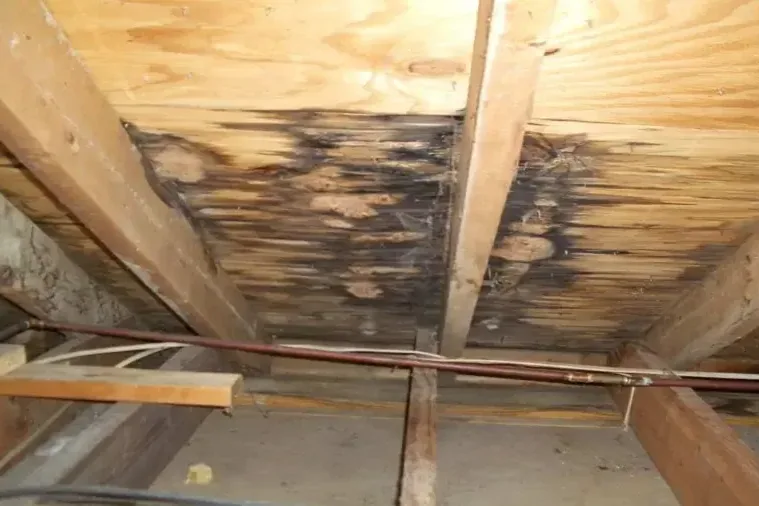
A roof leak lets rainwater past shingles or flashing and into the attic, where insulation holds it like a sponge. It then drops onto the ceiling below, and by the time a brown stain appears the damage is usually bigger than the stain. Dry-out works from the top down.
How water travels from the roof
Water runs along rafters and decking before it drips, so the entry point and the stain can be far apart. Insulation soaks and sags, ceiling drywall swells, and the dampness creeps down walls. A drying crew maps the whole path with meters and thermal imaging, so the repair addresses the real extent and not just the visible spot.
- Attic moisture mapping at the decking and framing
- Wet insulation bagged and removed
- Sagging ceiling drywall cut out and discarded
- Wall cavities opened where readings run high
- Dehumidifiers and air movers set for the attic and rooms below
Older roofs and April rain
Much of Alta Murrieta was built in the late 1980s and 1990s, so roofs there have had decades of sun and storms, while Mapleton homes generally feel newer. A rain storm such as the one on April 11, 2020 puts that age to the test, because old flashing, sealant and tile or shingle edges are where water slips through. A quick look after heavy rain can catch a leak while it is small.
Do not poke the bulge. A sagging ceiling filled with water can release it all at once, so a small hole and a bucket are safer than waiting for the drywall to give way.
Fixing the leak and the damage
The roofer repairs the opening, and the drying crew handles everything the water touched. Staging matters: if rain returns before the roof is sealed, a temporary tarp protects the dry-out. When readings reach normal levels, the ceiling and insulation can be replaced with confidence.
Roof leak water damage across Murrieta and nearby cities
The same service nearby: roof leak water damage in Wildomar, Temecula, Menifee.
Roof leak crews visit Alta Murrieta, Mapleton, Copper Canyon, The Colony and Greer Ranch, along with homes near Clinton Keith Road and the Santa Rosa Plateau.
Roof Leak Water Damage questions
Ceiling stained after rain? Crews work 24/7.
Ask a tech about the stainIs a ceiling stain after rain a roof leak?
Often, though plumbing and air conditioning can cause similar stains. A rain-linked stain that grows after storms points to the roof, and meters help separate the cause.
Does wet attic insulation need to be replaced?
Usually. Fiberglass and cellulose hold water and stay damp, losing performance and feeding mold within 24 to 48 hours, so wet insulation is normally removed.
Will homeowners insurance cover a roof leak?
Sudden storm damage is often covered, while wear and long-term neglect often are not. Keep photos, dates and drying records.
Should the ceiling be cut open?
If it is bulging or soaked, yes. Releasing trapped water prevents a collapse, and the drying crew can then reach the cavity to dry it.
How long does a roof leak take to dry?
Three to five days is typical, depending on insulation, ceiling type and humidity. Readings from a meter decide the finish.
Can I wait for the roofer before calling a drying crew?
Better not to. The roofer stops new water, but wet insulation and drywall keep damaging the house while they wait. The two jobs can run side by side.
What if the rain returns during the repair?
A temporary tarp protects the opening while permanent work is arranged, and the drying crew keeps monitoring so the dry-out does not slip backward.
Water dripping from the ceiling? Dry it now.
A leaking roof keeps feeding the attic, ceiling and walls until it is sealed and dried. Crews map the wet path, remove soaked material and dry what remains.