Structural Drying and Dehumidification in Murrieta, CA
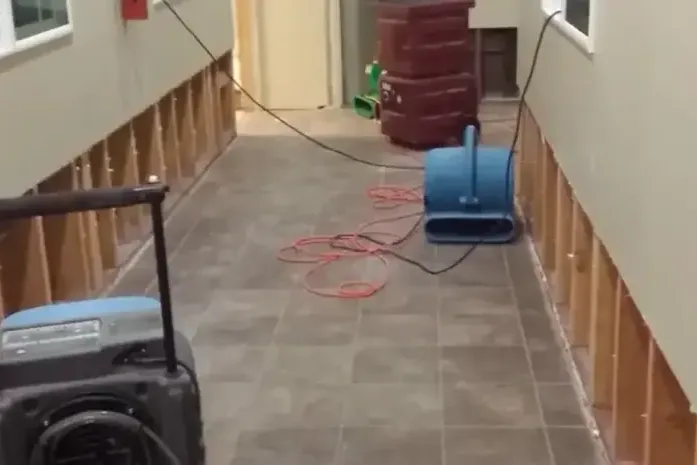
After the water is out, the materials still hold it. Crews place air movers and dehumidifiers, check readings daily and dry walls, subfloors and ceilings to standard.
(888) 450-9281Walls still damp? Start the drying- Daily moisture readings
- Air movers and dehumidifiers
- Dry standard proof
- Water category
- 1 to 3
- Class of loss
- 1 to 4
- Typical drying
- 3 to 7 days
- Drying standard
- IICRC S500
First steps for structural drying and dehumidification in Murrieta
- 1Keep equipment running
Leave the machines on and do not move them without asking.
- 2Close interior doors
Closed doors keep the drying zone contained.
- 3Do not turn on HVAC
Skip the air conditioner or heater unless the crew says it is safe.
- 4Report new damp spots
Tell the crew about any stain or smell that appears during the dry-out.
How structural drying and dehumidification is handled
Equipment sized to the loss
Air movers and dehumidifiers are chosen by affected area and class, not by guesswork.
Readings checked daily
Meters track progress, and the setup is adjusted until every wet material reaches the target.
Dry standard documented
Logs and photos prove the structure is dry for the insurer.
What does structural drying and dehumidification cost in Murrieta, CA?
Structural drying in this area typically costs $1,000 to $12,000, depending on the class of loss, the number of affected rooms, the materials involved and how many days of equipment are needed.
Class 1 or 2, one area
- Limited wet materials
- Few machines
- Short run
Class 3, several rooms
- Ceilings and walls wet
- More equipment
- Extra monitoring
Class 4, dense materials
- Concrete, hardwood or plaster
- Specialty drying
- Long monitoring period
Ranges only, not a quote. The drivers are the water category, the square footage, the material class and how fast drying started. For a planning number, run the water damage cost calculator.
The structural drying and dehumidification process, step by step
Structural drying and dehumidification in Murrieta, CA: placement of air movers and dehumidifiers, daily moisture readings and documented dry standards for walls, floors and ceilings.
- 1
Measure and map
The tech takes baseline readings and thermal images, then marks the wet areas and the dry reference points.
- 2
Set the equipment
Air movers and dehumidifiers go in to match the classes of loss, and containment keeps the airflow focused.
- 3
Monitor and adjust
Readings are taken at every visit, and machines are moved, added or removed as areas reach dry, so power use falls as the job nears the end.
- 4
Verify and release
When all materials meet the reference, the machines are removed and the file is given to the owner.
Structural drying is the process of removing water from the materials that hold a building up: framing, subfloors, drywall, ceilings and insulation. It follows extraction, and it decides whether the house returns to normal or hides trouble inside the walls.
How drying actually works
Drying relies on evaporation and removal of moist air. Air movers push dry air across wet surfaces, and dehumidifiers pull moisture out of the room so it does not settle elsewhere. The crew adjusts equipment at each visit, because the first day's setup rarely suits the third day's readings.
- Moisture meters take readings at set points across the walls and floors
- Thermal imaging reveals hidden wet areas behind finishes
- Air movers placed at angles to sweep each wet surface
- Low-grain refrigerant or desiccant dehumidifiers matched to the room
- Daily logs track readings against a dry reference for each material
Older homes, steady attention
Many homes in Alta Murrieta and neighboring areas were built from the late 1980s through the 1990s, so their walls, subfloors and ceilings carry decades of paint, tape and texture. That is no reason to rush the drying; wood framing, drywall and insulation all dry on different schedules, and each material is checked on its own. Patience and daily readings avoid callbacks, repeat staining and surprise odors after the walls are closed.
Equipment is not the clock. Drying ends when readings reach the dry reference, not when a set number of days has passed, and the final meter log is the proof.
What to expect during drying
The equipment will run continuously and the home will be warm and loud. Doors may be closed, and the crew returns to check the numbers. When the walls and floors match the reference, the equipment is removed and a report is given to the owner.
Structural drying and dehumidification across Murrieta and nearby cities
The same service nearby: structural drying and dehumidification in Wildomar, Temecula, Menifee.
Drying crews work in Alta Murrieta, Mapleton, The Colony, Copper Canyon, Greer Ranch and The Ranchos, as well as homes along Murrieta Hot Springs Road and Interstate 15.
Structural Drying and Dehumidification questions
Walls still damp? Drying crews work 24/7.
Ask a tech how drying worksHow long does structural drying take?
Three to seven days is common, though dense materials such as hardwood, plaster and concrete can take longer. Meters, not the calendar, decide when the job is done.
Why do the machines run all day?
Evaporation is continuous, and the process works best when the room stays closed and the machines run steadily. Stopping early leaves moisture in the framing and lets mold start within 24 to 48 hours.
Can I use my own fans?
Household fans move air but do not remove moisture, and they can push damp air into dry rooms. Professional dehumidifiers are needed to pull water out of the air itself.
Will the equipment raise my electric bill?
Yes, somewhat. The crew keeps the equipment to what the loss requires, and the cost can often be part of the claim.
What is the difference between classes of loss?
Class 1 is the least wet, with low-porosity materials, while Class 4 involves dense materials such as hardwood, plaster and concrete that dry slowly.
Does drywall need to be removed?
Not always. Drywall can dry in place when it is not saturated, though soft or sagging board is replaced.
How is the finish proven?
Final meter readings compared to a dry reference are recorded and given to the owner and insurer.
Water out but walls wet? Start the dry-out.
Moisture trapped in framing and subfloors causes warping and growth long after the puddles are gone. Crews place equipment, track readings and dry to standard.