Structural Drying and Dehumidification in Menifee, CA
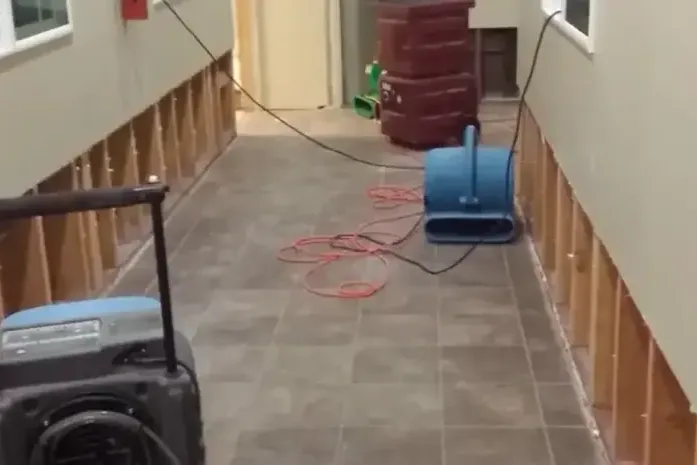
Menifee's dry climate helps once the source is stopped, but framing, subfloor and drywall still hold moisture. Crews dry them with measured airflow and dehumidification until readings reach the goal.
(888) 450-9281Plan a measured dry-out- Air movers
- Dehumidifiers
- Daily moisture logs
- Best for
- After extraction
- Tools
- Air movers, dehumidifiers
- Proof
- Daily moisture readings
- Standard
- IICRC S500
First steps for structural drying and dehumidification in Menifee
- 1Record the start
Moisture meters log the wet readings of walls, floors and framing before equipment is placed.
- 2Place equipment
Air movers and dehumidifiers are set in a pattern that dries every wet surface evenly.
- 3Check each visit
Readings are repeated and machines are moved as the wettest areas shift.
- 4Confirm the goal
Equipment comes out only when materials reach their dry targets.
How structural drying and dehumidification is handled
Framing and subfloor
Wood holds water longer than drywall, so studs, plates and subfloor are read in several places until each meets its target.
Drywall and insulation
Drywall that tests wet is dried in place when it can be saved, and wet insulation is removed.
Concrete and dense materials
Concrete and hardwood release moisture slowly, so they get extra dehumidification and longer monitoring.
What does structural drying and dehumidification cost in Menifee, CA?
Cost follows the class of damage, the number of rooms and the days equipment runs. A small one-area job needs few machines, while a multi-room Class 3 job needs many more. A survey sets the equipment count.
Class 1 or 2, one area
- One room or area
- A few machines running
- Short monitored drying
Class 3, several rooms
- Walls and ceilings wet
- More air movers and dehumidifiers
- Several days of checks
Class 4, dense materials
- Hardwood or concrete involved
- Specialty drying equipment
- Extended monitoring
Ranges only, not a quote. The drivers are the water category, the square footage, the material class and how fast drying started. For a planning number, run the water damage cost calculator.
The structural drying and dehumidification process, step by step
Structural drying uses air movers, dehumidifiers and meters to remove moisture from framing, subfloor, drywall and concrete, with daily readings until the dry goal is met.
- 1
Measure
Meters read the moisture in each wet material, and the results are recorded as the starting point for the drying plan, with the wettest spots flagged first.
- 2
Set up
Air movers and dehumidifiers are placed to push dry air across wet surfaces and pull moisture out of the room.
- 3
Monitor
Readings are taken every visit, and equipment is moved or added as the wettest materials change over the days.
- 4
Finish
When all materials reach the dry goal, the equipment is removed, and the logs and photos go to the adjuster along with a short written summary.
Pumping removes the water that is visible. Structural drying removes the moisture that is not, from studs, subfloor, drywall and concrete. A rainfall of only 12.51 inches a year and long dry stretches help, but humidity trapped in a closed room can slow drying if the equipment is not set up with care.
Classes of water damage
Drying plans follow the IICRC S500 classes. Class 1 and 2 jobs involve less moisture or less porous material, Class 3 involves water from above that soaks walls, ceilings and insulation, and Class 4 involves dense materials like hardwood and concrete that release moisture slowly. The class decides how many machines are needed and how long they run.
- Starting readings recorded in each wet material
- Air movers placed so air sweeps across every wet surface
- Dehumidifiers sized to the room and the moisture load
- Readings repeated each visit and equipment moved as needed
- Equipment removed only after materials reach the dry goal
Why dry weather is not enough
A dry climate helps moisture leave open surfaces, but water trapped inside walls, under flooring or in a closed room does not dry on its own. Left alone, framing stays damp and mold can follow within 24 to 48 hours. Controlled airflow and dehumidification dry a building faster and more evenly than open windows or household fans alone.
On site: Equipment is checked each visit, and the crew moves air movers as walls and floors dry, so the machines are always working on the wettest spots.
When the drying is finished
Drying is complete when readings in wood, drywall and subfloor match dry reference materials. The log of daily readings, the equipment record and photos go to the adjuster. Dry targets are set by comparing with an unaffected wall or floor in the same home, which gives a fair goal for each material, and water extraction or repair work can then follow if any materials were removed.
Structural drying and dehumidification across Menifee and nearby cities
The same service nearby: structural drying and dehumidification in Wildomar, Murrieta, Lake Elsinore.
Structural drying is set up across Sun City, Quail Valley, Romoland, Menifee Lakes and Audie Murphy Ranch, with crews working along Newport Road, McCall Boulevard and Interstate 215.
Structural Drying and Dehumidification questions
Walls and floors still damp? Describe the loss and the crew will plan the drying.
Ask about measured dryingWhat is the difference between drying and extraction?
Extraction removes liquid water with pumps and wands. Drying removes moisture held in materials and air with air movers and dehumidifiers, and it follows extraction.
How long does structural drying take?
Most jobs run several days, depending on materials, humidity and how wet the structure was. Dense materials like hardwood and concrete can take longer.
Why are the machines so loud?
Air movers push large volumes of air, and dehumidifiers run compressors. The noise is the sign of work, and the crew places machines to limit the noise where possible.
Does drying raise the electric bill?
Yes, somewhat, since the equipment runs around the clock. Some insurers account for it in the claim, so keep a note of the equipment and the days it ran.
How do I know the structure is dry?
Readings are compared with dry reference materials in the same home. When wet areas match the reference, drying is complete and the readings are recorded.
Can I use my own fans and dehumidifier?
Household fans help a little, but they do not match the airflow and humidity control of professional equipment. Measured drying needs meters to prove the result.
Do wet walls always need to be cut open?
No. Wall cavities can be dried through small holes or by pulling baseboards when readings drop steadily. Only material that will not dry is removed.
Need the structure dried?
Meters, air movers and dehumidifiers are ready for every class of loss. Call any hour and describe the rooms, the materials and how long they have been wet.