Structural Drying in Temecula, CA
Structural drying in Temecula homes with open floor plans means drying walls, subfloors and cabinets across large connected rooms, one measured reading at a time.
(888) 450-9281Bring in the drying equipment- Air movers
- Dehumidifiers
- Logged moisture readings
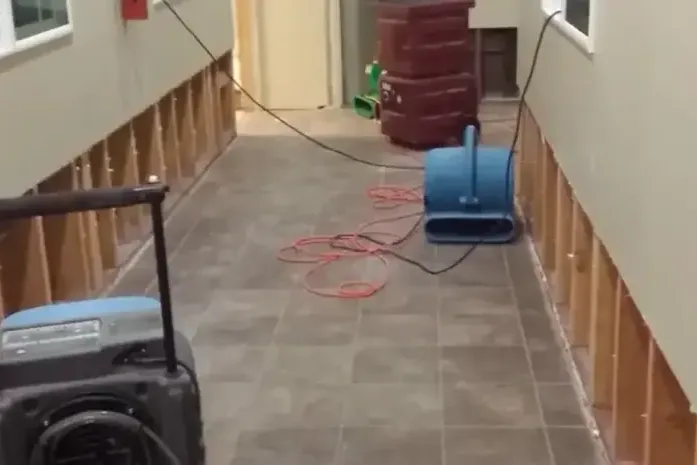
- Core equipment
- Air movers, dehumidifiers
- Measured by
- Moisture meters, thermal imaging
- Standard
- IICRC S500
- End point
- Dry goal reached
First steps for structural drying and dehumidification in Temecula
- 1Get the water out
Finish extraction before dehumidifiers and air movers are set up.
- 2Keep doors and windows closed
Closed rooms let dehumidifiers work well; open windows only when told.
- 3Leave equipment running
Do not switch off air movers or dehumidifiers, even if the noise is annoying.
- 4Be home for readings
Technicians return to measure materials, so access on each visit keeps the schedule moving.
How structural drying and dehumidification is handled
Moisture mapping and plan
Meters and thermal cameras set the dry goal and show which walls and floors need equipment.
Equipment placement
Air movers and dehumidifiers are positioned to sweep floors, wall bases and cabinet fronts.
Monitoring and verification
Readings are logged each visit until materials meet the dry goal, then equipment is removed.
What does structural drying and dehumidification cost in Temecula, CA?
A Class 1 or 2 loss in one area usually runs $1,000 to $2,500. A Class 3 loss across several rooms costs $2,500 to $6,000, and a Class 4 loss in dense materials can reach $6,000 to $12,000.
Class 1 or 2, one area
- Small wet zone
- Basic equipment set
- Short monitoring
Class 3, several rooms
- Ceilings or walls wet
- More equipment
- Daily readings
Class 4, dense materials
- Hardwood or plaster
- Specialty drying
- Long monitoring
Ranges only, not a quote. The drivers are the water category, the square footage, the material class and how fast drying started. For a planning number, run the water damage cost calculator.
The structural drying and dehumidification process, step by step
Equipment-based drying of walls, floors and cabinets after water damage, steered by moisture readings until every material reaches its dry goal.
- 1
Map the moisture
A technician takes readings across floors, walls and cabinets, then sets the dry goal from unaffected materials in the same home.
- 2
Place the equipment
Air movers and dehumidifiers go up according to the map, and rooms are closed so the system works efficiently.
- 3
Monitor and adjust
Readings are logged each visit, and equipment is moved or added where materials stay damp longer than expected.
- 4
Verify and remove
Final readings confirm the structure is dry, and equipment comes out with a written report for the owner and the carrier.
Drying is not guesswork. After the water is extracted, structural drying removes the moisture still held in framing, drywall, subfloor and cabinets. Many Temecula homes have open floor plans and attached garages, so one loss can involve several connected spaces that must be dried as a single system. Large great rooms and long hallways make airflow planning more important than raw equipment count.
How the equipment works
Air movers push dry air across wet surfaces, which lifts moisture into the air, while dehumidifiers pull that moisture out so it cannot settle again. Containment keeps the dry zone separate from the rest of the house. Technicians adjust placement as readings change, and they record temperature and humidity along with material moisture, because the air itself decides how fast water can leave a surface.
- Moisture meters measure materials at set points on each visit
- Thermal cameras show cool, wet areas behind finished surfaces
- Air movers are placed to sweep floors, wall bases and cabinet fronts
- Dehumidifiers are sized to the volume of the connected rooms
- Wet baseboards, toe kicks or drywall are opened when cavities stay damp
Why classes and materials matter
The IICRC S500 standard sorts losses by how much water materials absorb and how fast it evaporates. A Class 1 or 2 loss in one area dries faster than a Class 3 loss across several rooms, and a Class 4 loss in dense materials such as hardwood or plaster takes the longest. Cabinets, tile backer and thick framing hold water longer than thin drywall, so the plan reflects the materials, not just the room size.
The dry goal is set first. Readings from unaffected materials give the target, and equipment stays until the wet materials match it.
Mold window
Damp materials can grow mold in 24 to 48 hours, which is why drying starts as soon as extraction is complete. If the structure was wet by a leak under a floor, see slab leak water damage for the focused steps. A final check confirms the equipment can come out without leaving damp spots behind.
Structural drying and dehumidification across Temecula and nearby cities
The same service nearby: structural drying and dehumidification in Wildomar, Murrieta, Menifee.
Structural drying crews serve Redhawk, Harveston, Paseo del Sol, Wolf Creek and Crowne Hill, along with homes near Interstate 15, Highway 79 and Old Town Temecula.
Structural Drying and Dehumidification questions
Water is out but the walls still feel damp? Describe the rooms to a dispatcher and learn how readings steer the dry-out.
Ask about drying equipmentHow long does structural drying take?
It depends on the materials, the size of the loss and the humidity. Equipment stays until readings meet the dry goal, and the crew reports progress on each visit.
Why are dehumidifiers needed with fans?
Fans move moisture off surfaces, and dehumidifiers remove it from the air. Without the second step the water just recirculates through the house.
Can I open the windows?
Usually not, because outside air can add humidity. The crew will say when windows may be opened, and which doors can stay closed.
Is the equipment loud?
Yes, air movers and dehumidifiers produce steady noise, but running them continuously is what gets the structure dry as quickly as possible.
What is the IICRC S500?
It is an industry standard for water damage restoration that directs drying, measurement and documentation, and it is the standard these crews follow.
Will walls need to be opened?
Sometimes. If cavities stay damp, baseboards or drywall are opened so air can reach the framing and the readings can fall, and the openings are documented.
How do I know it is dry?
Final readings compare wet materials to the dry goal, and a written report documents the result for the owner and carrier.
Dry the structure to a goal
Damp framing feeds long-term problems. One call brings meters, equipment and a written plan to the home.