Water Extraction in Temecula, CA
Standing water in a garage, hallway or great room will not wait. Extraction pulls it out before it soaks into drywall, cabinets and the subfloor beneath an open floor plan.
(888) 450-9281Get pumps to the property- Pumps and wet vacuums
- Moisture mapping
- Straight into drying
- Best for
- Standing water indoors
- Typical gear
- Pumps, wands, wet vacuums
- First check
- Water category and source
- Next step
- Structural drying
First steps for water extraction and removal in Temecula
- 1Stop the water
Close the main valve or the appliance supply, then switch off power to the wet room if the panel is dry.
- 2Photograph the damage
Take wide and close photos before moving anything so the claim file has a clear starting record.
- 3Call the crew
Describe the source, the rooms affected and whether the water looks clean, cloudy or dark.
- 4Clear the floor
Lift small valuables, rugs and electronics out of the wet area and leave larger furniture for the crew.
How water extraction and removal is handled
Pump-out and extraction
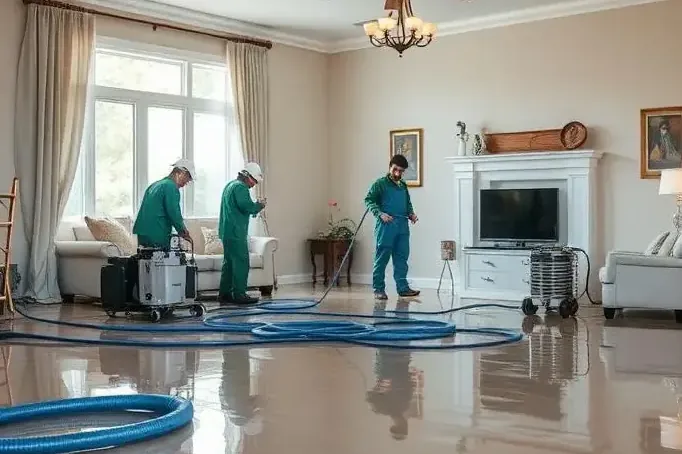
Submersible pumps, truck-mounted units and wands remove standing water from tile, wood floors, carpet and pad, with wet vacuums for the final inches.
Moisture mapping
Meters and thermal cameras show which walls, floors and cabinets took on water, including areas that look dry.
Removal of unsalvageable materials
Soaked pad, insulation and drywall that cannot dry in place are cut out, bagged and logged for the insurance file before drying equipment goes in.
What does water extraction and removal cost in Temecula, CA?
Small clean-water spills usually cost between $500 and $1,200, while several wet rooms run $1,200 to $2,500. Gray or black water pushes the total to $2,500 to $6,000 because contaminated materials must be removed.
Small clean-water spill
- One room affected
- Clean supply water
- Single extraction visit
Several wet rooms
- Hall and adjoining rooms
- Pad and baseboards handled
- Drying equipment set up
Gray or black water spread
- Contaminated materials removed
- Protective gear used
- Cleaning before drying
Ranges only, not a quote. The drivers are the water category, the square footage, the material class and how fast drying started. For a planning number, run the water damage cost calculator.
The water extraction and removal process, step by step
Pump-out, wet vacuum and floor extraction for single-family homes, condos and shops, with moisture checks that decide how far the drying has to go.
- 1
Assess the loss
A technician finds the source and checks the water category, then maps where moisture has traveled through the floors, walls and cabinets.
- 2
Extract the water
Pumps and wands remove the bulk of the volume, and wet vacuums finish the low spots, thresholds and edges of each room.
- 3
Remove what cannot dry
Saturated pad and soft materials come out, and the remaining surfaces are cleaned and prepared so equipment can work at full strength.
- 4
Hand off to drying
Air movers and dehumidifiers are set in place, and moisture readings steer the equipment until the structure reaches its dry goal.
Water extraction is the first job on almost every loss. In Temecula that often means pulling standing water from single-family homes with attached garages and open floor plans in master-planned communities such as Redhawk and Harveston. The faster the volume leaves, the less drying remains, and the smaller the repair bill becomes once the walls are closed up again.
Why speed matters indoors
Water moves sideways and down. It wicks up drywall, saturates carpet pad and slips under baseboards into wall cavities. Open great rooms let a single spill reach the kitchen, hall and dining area, so crews map the wet zone before choosing pumps and wands. Hardwood and laminate planks are checked for cupping, and rugs are lifted so the floor beneath can breathe while the work continues.
- Truck-mounted units clear large volumes from tile, wood and carpet
- Submersible pumps handle standing water in garages and utility rooms
- Weighted tools lift water out of carpet and pad
- Moisture meters confirm where water traveled behind the surface
- Materials that cannot be saved are tagged, photographed and removed so drying equipment can go in
Open layouts and attached garages
Many homes here pair open layouts with attached garages. Water that starts at a garage water heater or a washer can run under a door into the nearest hallway, while a leak in a great room can spread across continuous flooring. Crews trace where the water stopped, not just where it started, and extract along that full path. Cabinet toe kicks, door casings and the edges of built-in shelving are checked too, since those spots trap water that a quick pass misses.
Category matters. Clean supply water can usually be extracted and dried in place, while gray and black water call for removal of porous materials and cleaning first.
What follows extraction
Extraction is not the finish. Once standing water is gone, the crew takes readings, opens wall bases if needed and sets air movers and dehumidifiers. Damp materials can start growing mold inside 24 to 48 hours, so the handoff to structural drying is immediate.
Water extraction and removal across Temecula and nearby cities
The same service nearby: water extraction and removal in Wildomar, Murrieta, Menifee.
Extraction crews work across Redhawk, Harveston, Paseo del Sol and Wolf Creek, along Interstate 15 and Highway 79, and in the shops and homes around Old Town Temecula.
Water Extraction and Removal questions
Water standing in a room right now? Describe it to a dispatcher and learn what to do before the crew arrives.
Talk to the extraction deskHow quickly does extraction need to start?
As early as the crew can get there. Standing water soaks into drywall and pad quickly, so every pause adds drying work, repair scope and cost to the final bill for the owner.
Can a wet vacuum from a hardware store do the job?
It removes surface water, but it cannot pull moisture out of pad, subfloor or wall cavities. Professional extraction followed by structural drying finishes what a shop vacuum leaves behind, and it comes with readings that prove the result.
Is extraction different for garages?
Slightly. Concrete garage floors shed water easily, but water often runs under the door and into the house, so the crew follows it into adjoining rooms and checks the shared wall for moisture, too.
Will my carpet be saved?
Often yes if the water was clean and extraction began promptly. Pad is more likely to be replaced, and carpet touched by gray or black water usually comes out, since it cannot be disinfected reliably.
Does extraction come with moisture readings?
Yes. Readings before and after extraction show how much water remains in materials and give the adjuster a dated record of the improvement, room by room.
What if the water looks dirty?
Treat it as contaminated. Keep children and pets out, avoid touching it and call so the crew can set up protective gear, removal and cleaning.
Is extraction covered by insurance?
Sudden losses are often covered, though policies differ. The crew documents the work in claim-ready form so the carrier has the photos, readings and scope it needs.
Pull the water out before it spreads
Every pause lets water climb walls and soak pad. One call brings pumps, readings and a drying plan to the property.