Water Extraction and Removal in Murrieta, CA
Standing water from a failed pipe or a hard rain does more harm every hour it sits. Crews pump and vacuum it out of Murrieta homes, then map what stayed wet so the drying starts on solid ground.
(888) 450-9281Water on the floor? Get pumps rolling- Pumps and vacuums
- Moisture mapping
- Photo log for claims
- Water category
- 1 to 3 by source
- Typical extraction
- 1 to 4 hours
- First goal
- Remove bulk water
- Drying standard
- IICRC S500
First steps for water extraction and removal in Murrieta
- 1Stop the source
Close the main or the fixture valve, and switch off power to wet outlets at the panel if the floor around it is dry.
- 2Lift small items
Move rugs, boxes and electronics onto dry surfaces before they soak through.
- 3Skip the household vacuum
A standard vacuum is not built for water and can shock the person holding it.
- 4Photograph the room
Wide and close shots with the date help the claim later.
How water extraction and removal is handled
Bulk water removed first
Pumps and extractors take the standing water before anything else is moved, so walls and subfloors stop absorbing it.
Wet material sorted
Pad, insulation and drywall that cannot be saved are separated from what can dry in place, with photos of each decision and a note on why.
Readings passed to drying
Moisture levels recorded after pumping become the starting point for the drying plan, the equipment count and the claim file the adjuster asks for.
What does water extraction and removal cost in Murrieta, CA?
Water extraction in this area usually costs $500 to $6,000, depending on how much water is down, how many rooms it reached and whether it is clean or contaminated. Drying and any rebuild are quoted separately, so the extraction figure stays clear.
Small clean-water spill
- One room affected
- Pump and wet vacuum
- Quick moisture check
Several wet rooms
- Two or more rooms
- Extractor on carpet
- Wall readings taken
Gray or black water spread
- Contaminated source
- Protective gear used
- Disposal of wet materials
Ranges only, not a quote. The drivers are the water category, the square footage, the material class and how fast drying started. For a planning number, run the water damage cost calculator.
The water extraction and removal process, step by step
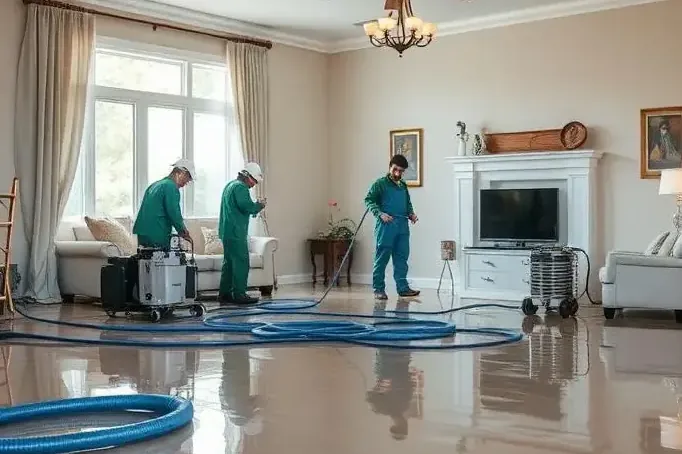
Water extraction and removal in Murrieta, CA: pumping and vacuuming of standing water from carpet, pad and floors, followed by moisture mapping and drying records.
- 1
Check the hazards
The tech looks for electrical risk and slippery floors, and confirms the source is shut off before any hose goes down.
- 2
Pull the water out
Pumps handle depth while extractors and wet vacuums work carpet, pad and floor edges, starting at the lowest spot.
- 3
Test what remains
Meters and thermal images show which walls and subfloor sections stayed wet, and those spots get marked with tape or paint for the drying plan.
- 4
Hand off to drying
Readings and photos go into the job file, and the drying plan is built from them, so equipment is placed where it counts and the power draw stays reasonable.
Water extraction is the first physical step after a leak, overflow or storm intrusion: getting the bulk water out before it wicks into drywall, subfloors and cabinet bases. In this part of Riverside County the cause is usually a failed supply pipe, an overflowing fixture or rain that found a way inside, and each one deserves the same urgency.
Why removal comes before drying
Dehumidifiers and air movers work on moisture held inside materials, not on puddles. Standing water makes them spend their capacity evaporating a flood that a pump could have lifted in a short visit, and it keeps feeding the walls above it. Pulling the water first shortens every later stage, trims equipment time and keeps the rest of the house drier.
- Submersible pumps for water deeper than an inch
- Truck-mounted and portable extractors for carpet and pad
- Wet vacuums for tile, laminate and tight corners
- Drying mats that draw water out from under hardwood
- Moisture meters and thermal imaging to find what stayed wet after pumping
Rain, pipes and a collapsed roadway
The storm of April 11, 2020 showed what hard rain and a failed underground pipe can do, when part of Alta Murrieta Drive collapsed into a sinkhole and the same pipe was found to have leaked in 2019. Homes see a smaller version of that story: a supply pipe lets go overnight, a threshold takes on rain, and a floor holds an inch of water by morning. The crew names the source first, because clean water, gray water and storm runoff are handled differently.
Carpet pad rule. Padding that stays soaked for more than a day or two is usually removed, because it holds water against the tack strip and subfloor long after the surface feels dry.
What happens on the visit
The crew begins with the source and a safety check, then removes water from the lowest points first. Moisture readings follow, and any wet material that cannot be saved is photographed before it comes out. Meter logs and pictures are kept so the adjuster sees the starting condition and not only the finished room.
Water extraction and removal across Murrieta and nearby cities
The same service nearby: water extraction and removal in Wildomar, Temecula, Menifee.
Extraction crews work across the city, from Alta Murrieta and Mapleton to The Colony, Greer Ranch and The Ranchos, plus homes near Clinton Keith Road and the I-15 and I-215 corridors.
Water Extraction and Removal questions
Water pooling on the floor? Crews work 24/7.
Talk through the pumping with a techHow fast does standing water need to come out?
Sooner is better, because drywall, subfloor and cabinet bases start absorbing water right away, and trapped moisture lets mold begin in 24 to 48 hours. Pumping the bulk water first limits how far it spreads and how long drying takes.
Can a wet vacuum from the hardware store do the job?
It helps with a small spill on tile, but it leaves water in pad, grout joints and under baseboards. Professional extractors pull far more per pass, and meters afterward show whether anything is still wet.
Is carpet always thrown out after extraction?
No. Carpet wet by a clean supply source can often be lifted, the pad replaced and the carpet dried in place. Gray or black water, or carpet left soaking for days, is different and usually goes.
Why does the water category matter?
Category 1 comes from a clean supply, Category 2 carries some contamination such as washing machine discharge, and Category 3 includes sewage and storm runoff. The category sets protective gear, what can be kept and the price tier.
Does the crew come out after rain as well as pipe breaks?
Yes. Rain that enters through a door, window or roof is treated like any other flood, though storm water counts as contaminated until the source is judged. Photos of the entry point help the claim.
What about furniture sitting in the water?
Pieces are lifted onto blocks or moved to dry rooms first. Solid wood and tile-top items often survive with drying, while upholstered ones that wicked up water may need cleaning or replacing, which the adjuster can decide from photos.
Will extraction alone finish the job?
Rarely. Pumping removes the visible water, but walls, subfloor and framing still hold moisture. Structural drying with air movers and dehumidifiers follows, and readings tell the crew when the structure is truly dry.
Water standing in the house? Get it pumped.
The longer water sits, the higher it climbs into drywall and cabinet bases. Local crews bring pumps and meters, remove the bulk water and map what stayed wet.