Water Extraction in Moreno Valley, CA
Standing water in a bedroom, garage or hallway needs to come out fast. Crews bring pumps and extraction wands, remove the water and check what is still wet underneath the floor and behind the baseboards.
(888) 450-9281Book water removal for tonight- Pumps and wands
- Padding removal
- Moisture checks
- Method
- Pumps and extraction wands
- Water types
- Clean, gray or black
- Start
- Any hour of the day
- Next step
- Structural drying
First steps for water extraction and removal in Moreno Valley
- 1Stop the source
The crew traces the leak, closes the valve and shuts off power to wet circuits when it is safe.
- 2Pump and extract
Pumps clear deep water, then wands pull moisture out of carpet, padding and hard floors.
- 3Measure what remains
Meters and thermal images map wet walls and subfloor so no hidden pocket is missed.
- 4Hand off to drying
Extraction ends and drying begins, with equipment placed to match the readings.
How water extraction and removal is handled
Clean water spills
Supply leaks, overflowing tubs and tank failures are pumped out quickly, and flooring is dried in place whenever it can be saved.
Gray water
Washer and dishwasher overflows carry soap and soil, so the area is extracted, cleaned and checked before any materials stay.
Contaminated water
Sewage or runoff mixed with mud is handled with protective gear, careful removal and sanitizing of affected surfaces, kept apart from clean areas.
What does water extraction and removal cost in Moreno Valley, CA?
Small clean-water spills usually land between $500 and $1,200, while several wet rooms run from $1,200 to $2,500. Gray or black water that has spread costs more, from $2,500 to $6,000, because removal and sanitizing add labor.
Small clean-water spill
- One room or area affected
- Pump and wand pass completed
- Quick moisture check afterward
Several wet rooms
- Multiple rooms involved
- Wet padding removal
- Extended meter readings logged
Gray or black water
- Contamination possible
- Protective gear used
- Surfaces sanitized
Ranges only, not a quote. The drivers are the water category, the square footage, the material class and how fast drying started. For a planning number, run the water damage cost calculator.
The water extraction and removal process, step by step
Extraction removes clean, gray or black water from floors, carpet and padding using pumps and wands, then maps the moisture so drying targets every wet surface.
- 1
Dispatch
A coordinator gathers the details and routes a crew, and you are told what to photograph while the team heads over.
- 2
Assessment
The crew finds the source and checks power safety, then sorts the water into clean, gray or black so the right method is used.
- 3
Extraction
Pumps clear the volume and wands work through carpet and pad, and hard floors are vacuumed until the surface is clear and the water is checked as it comes out.
- 4
Verification
Meters record what remains wet and the findings are logged, so drying starts from real numbers and the claim file shows them with photos.
In Moreno Valley, storm runoff has put mud and water into bedrooms and garages, and plumbing failures do the same from the inside. Extraction is the first job: get the volume out before it climbs the walls and soaks the subfloor, then hand off to structural drying.
How extraction works on a wet floor
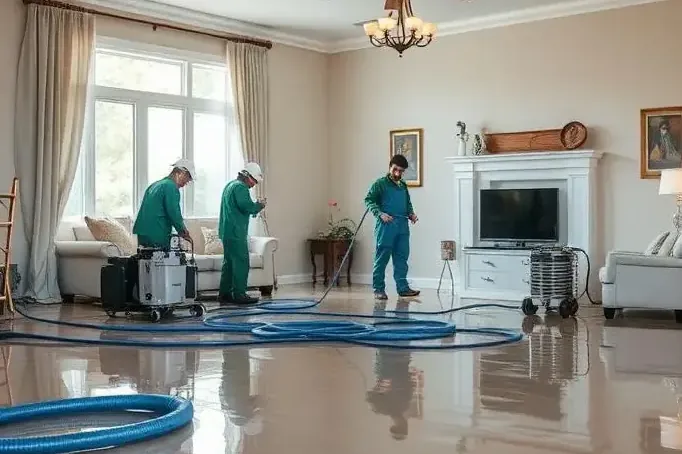
A crew starts by finding where the water came from and stopping it, then sets submersible pumps for deep water and extraction wands for carpet and padding. Hard floors get squeegee and vacuum passes. Moisture meters then show which materials still hold water, so nothing is left behind to swell, stain or stay damp.
- Submersible pumps clear deeper standing water from garages and ground floors
- Weighted wands pull water out of carpet fibers and padding
- Baseboards and wall bottoms are checked for water that wicked upward
- Wet padding is cut out and discarded when it cannot be dried
- Meters and thermal cameras confirm what still needs drying once the visible water is gone, with readings logged for the claim file
Why speed matters after a spill
Water spreads sideways and upward the moment it lands. Drywall wicks it above the visible line, wood flooring cups, and padding holds a surprising amount. Mold can begin to establish in the 24 to 48 hour window, which is why the first call should come before the cleanup towels do. Shutting off the source and lifting small items off the floor helps while the crew is on the way.
Rented homes. About 35.3% of occupied homes here are rented, so extraction work often involves owners and renters sorting out who reports the loss.
What to keep and what to toss
Clean-water losses caught early often let furniture and flooring stay. Gray or black water changes that, and porous items such as carpet pad, upholstered pieces and insulation are usually removed. Crews list every item before disposal so the insurance record matches what was lost. Ask the crew to note anything removed.
Water extraction and removal across Moreno Valley and nearby cities
The same service nearby: water extraction and removal in Wildomar, Menifee, Lake Elsinore.
Extraction crews reach Edgemont, Sunnymead and the Moreno area, along Cactus Avenue, Heacock Street and Alessandro Boulevard, and the streets around Day Street and Oliver Street.
Water damage restoration in Moreno Valley · every town covered
Water Extraction and Removal questions
Ask about pumps, padding or what your insurer needs to see.
Ask a water removal questionHow soon should extraction begin?
As soon as it is safe to enter. Standing water soaks into drywall and subfloor quickly, and the mold window opens around 24 to 48 hours. Shut off the source, take photos and call a crew.
Can I handle it with a wet vacuum?
A household vacuum helps with a small spill, but it leaves water in padding and under baseboards. Crews use stronger pumps and meters to confirm nothing wet remains behind. Meters show what a vacuum misses.
Does insurance pay for extraction?
Sudden pipe or appliance failures are often covered, but homeowner's insurance does not cover flood losses. A separate flood policy is needed and usually takes 30 days to start.
What if the water came from a storm?
Storm runoff often carries mud and debris, so it is treated as contaminated. Crews extract, remove porous materials and sanitize before any drying equipment goes in.
Will my carpet need to be replaced?
Not always. Carpet from a clean leak caught early can often be dried in place, while the pad is commonly replaced. Gray or black water usually means removal. Moisture readings settle the question.
Should renters call the landlord first?
Yes, and the renter's insurer too. About 35.3% of occupied homes here are rented, and crews document the loss so whoever files the claim has the records.
What should be photographed first?
Capture the water line on the walls, the affected floors and any damaged belongings before moving anything. Date-stamped photos support the claim and help the crew plan. Include wide shots too.
Water on the floor right now?
A local crew can start pulling water out, check the walls and set up the records your insurer will want. Call any hour of the day or night.