Structural Drying in Moreno Valley, CA
Air movers, dehumidifiers and daily meter readings dry walls, floors and framing to a measured target, so rebuilding never begins over damp materials in the home.
(888) 450-9281Book the dry-out equipment today- Air movers
- Dehumidifiers
- Daily readings
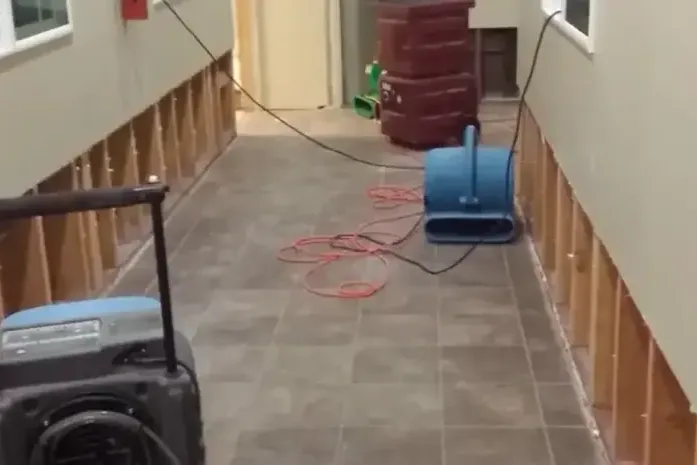
- Equipment
- Air movers, dehumidifiers
- Standard
- IICRC S500
- Monitoring
- Daily meter readings
- Records
- Dry report for claim
First steps for structural drying and dehumidification in Moreno Valley
- 1Map the moisture
Meters set the wet boundaries and the dry target.
- 2Place equipment
Air movers and dehumidifiers go in where readings call for them.
- 3Check daily
Readings are taken each visit and the setup is adjusted.
- 4Sign off dry
Equipment comes out only when targets are met.
How structural drying and dehumidification is handled
Class 1 and 2 losses
Small areas with limited absorption, such as a single wet wall, dry quickly with a few air movers.
Class 3 losses
Water from above soaks ceilings, walls and floors, so more equipment and longer monitoring are used.
Class 4 losses
Dense materials like plaster, hardwood and subfloor hold moisture deeply and need specialty drying approaches.
What does structural drying and dehumidification cost in Moreno Valley, CA?
Class 1 or 2 drying in one area usually costs $1,000 to $2,500. Class 3 drying across several rooms runs $2,500 to $6,000, and Class 4 drying of dense materials can reach $6,000 to $12,000.
Class 1 or 2, one area
- Few air movers
- One dehumidifier
- Short monitoring
Class 3, several rooms
- More equipment placed
- Wall cavities opened
- Longer monitoring
Class 4, dense materials
- Specialty drying methods
- Extended run time
- Frequent readings
Ranges only, not a quote. The drivers are the water category, the square footage, the material class and how fast drying started. For a planning number, run the water damage cost calculator.
The structural drying and dehumidification process, step by step
Structural drying places air movers and dehumidifiers, tracks moisture daily and dries framing, subfloor and drywall to the IICRC S500 target.
- 1
Assess
The crew maps moisture with meters and thermal cameras, then picks the drying class and the equipment to match, and the plan is explained before equipment is placed.
- 2
Set up
Air movers and dehumidifiers are placed to move air across wet surfaces, and cavities are opened where air must reach.
- 3
Monitor
Readings are taken at each visit and logged, and the equipment is shifted whenever a wet pocket lingers.
- 4
Finish
Machines are removed once targets are met, and the dry report is delivered with the photo record, and a copy is kept for your records.
Pulling the standing water out is only half the job. Water that soaked into framing, drywall and subfloor stays there until equipment moves it out, and structural drying is how a Moreno Valley home returns to a safe, repairable condition. Skipping this step is how damp framing and stale odors end up sealed behind new paint.
How drying equipment works
Air movers push dry air across wet surfaces so moisture evaporates, and dehumidifiers pull that moisture out of the air so it cannot settle somewhere else. The two work together in a closed room, which is why windows stay shut and equipment sits in specific spots set by the crew. Fans alone are not enough, because moisture pulled off a wall simply returns to the air unless a dehumidifier removes it.
- Air movers aimed along wet walls and floors
- Dehumidifiers sized to the room volume
- Wall cavities opened or drilled for airflow
- Moisture meters check drywall, framing and subfloor
- Readings recorded daily until each material reaches its dry goal and the equipment is removed
Drying classes and targets
The S500 standard sorts losses into classes by how much water the materials absorbed, and the class sets how much equipment is used. A dry reference reading from an unaffected part of the house gives the crew a target, and equipment stays until the wet areas match it. Dense materials such as hardwood or plaster take longer than drywall. Crews explain the class chosen so owners understand why the number of machines changes.
Building inspection. The city offers a Building Special Assessment for special inspection due to building damage or unpermitted work.
Documentation and the final report
Each visit adds photos and readings to the file, and the final dry report is what adjusters and contractors rely on before rebuilding starts. The water extraction records feed straight into it.
Structural drying and dehumidification across Moreno Valley and nearby cities
The same service nearby: structural drying and dehumidification in Wildomar, Menifee, Lake Elsinore.
Drying crews work across Edgemont, Sunnymead and Moreno, along Cactus Avenue, Alessandro Boulevard and Sunnymead Boulevard, and in the Day Street and Oliver Street areas of town.
Water damage restoration in Moreno Valley · every town covered
Structural Drying and Dehumidification questions
Ask about drying classes, equipment noise or the dry report.
Ask a drying questionHow long does structural drying take?
It depends on the materials, the amount of water and the weather indoors, so the crew works to meter readings instead of a set number of days.
Why is the equipment so loud?
Air movers and dehumidifiers run continuously to move moisture out, and the noise stops once readings reach the dry target and the machines are removed.
Can I keep windows open during drying?
Usually not, because dehumidifiers work best in a closed space. The crew explains which rooms to keep shut.
Do I need a permit or inspection after water damage?
Sometimes. The city offers a Building Special Assessment for special inspection due to building damage or unpermitted work, and repairs may need other permits.
Will insurance pay for drying equipment?
Sudden water losses often include drying, though flood losses are not covered by homeowner's insurance. Equipment logs and the dry report support the claim.
How do you know when drying is done?
Meters show each material at its target reading compared with a dry reference, and the readings are recorded so the dry report is clear.
Is mold a concern during drying?
Materials that stay wet past the 24 to 48 hour window can grow mold, which is why equipment is set up quickly and monitored.
Walls still damp after cleanup?
A local crew can map the moisture, set the equipment and prepare the dry report your insurer will want. Call any hour of the day or night.