Roof Leak Water Damage in Moreno Valley, CA
A stained ceiling usually means more water above it. Crews trace the leak path, remove wet insulation and drywall, and dry the attic and rooms below before sagging and staining spread.
(888) 450-9281Dry out the leaking ceiling- Attic inspection
- Insulation removal
- Ceiling drying
- Cause
- Rain through the roof
- Signs
- Ceiling stains and drips
- Work
- Trace, remove, dry
- Permit
- Re-roofs need one
First steps for roof leak water damage in Moreno Valley
- 1Protect contents
Furniture is moved or covered and sagging ceiling spots are released safely.
- 2Trace the path
Meters and a look in the attic show where the water entered and spread.
- 3Remove wet material
Insulation and damaged drywall come out so the framing can dry.
- 4Dry and verify
Air movers and dehumidifiers run until attic and room readings reach target.
How roof leak water damage is handled
Single ceiling stains
One stained area is opened, the wet insulation is removed and the ceiling is dried in a short visit.
Multi-room leaks
Water that traveled across the attic is traced room by room, with wet ceilings and walls opened as needed.
Long-running leaks
Slow roof leaks can soak decking and framing for weeks, so wider drying and material removal are planned.
What does roof leak water damage cost in Moreno Valley, CA?
A single ceiling stain usually costs $1,000 to $2,500 to dry. Several rooms below the leak run $2,500 to $6,000, while a long-running roof leak that soaked decking and framing can reach $6,000 to $12,000.
One ceiling stain
- Single ceiling area
- Insulation swap
- Short drying run
Several rooms below
- Multiple ceilings wet
- Wall cavity checks
- More drying equipment
Long-running roof leak
- Decking and framing wet
- Wider removal
- Extended monitoring
Ranges only, not a quote. The drivers are the water category, the square footage, the material class and how fast drying started. For a planning number, run the water damage cost calculator.
The roof leak water damage process, step by step
Roof leak cleanup finds the water path, removes wet insulation and ceiling material, and dries attic decking and rooms below with documented readings.
- 1
Survey
The crew checks the ceiling and attic with meters, then traces the water path so the full wet area is known before any cutting starts.
- 2
Protect
Contents are covered and sagging drywall is released safely, and loose insulation is bagged and removed.
- 3
Dry
Fans and dehumidifiers are set up in the attic and the rooms below, and the equipment is adjusted at each visit.
- 4
Document
Readings and photos are saved until everything is dry, and the file goes to the adjuster with the invoice.
Heavy storms test every roof. Moreno Valley saw major rain in 2010 and a summer downpour that flooded streets, and when water finds a weak spot above, the first sign is usually a brown stain or a drip on the ceiling below. Quick action matters because wet insulation and decking can stay damp long after the rain stops.
Following the water above the stain
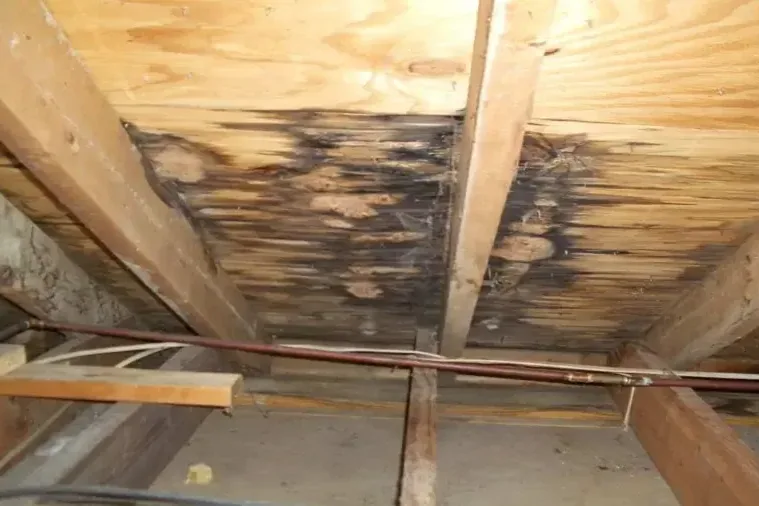
Roof water rarely drops straight down. It runs along rafters, soaks insulation and travels to wherever it can escape, so the visible stain can sit well away from the true leak. Crews check the attic, trace the path and measure how far the moisture has spread before anything is cut open.
- Attic decking and rafters checked with moisture meters
- Wet insulation removed so it stops holding water
- Sagging or stained ceiling drywall cut out and replaced later
- Buckets and tarps used to protect contents while work continues
- Fans and dehumidifiers run until attic and ceiling readings reach the target and are logged for the file
Re-roof permits and repairs
Stopping the leak is the roofer's job, and the restoration crew dries what the water reached. A re-roof of any size or type needs a re-roof permit from the city, applied for through SimpliCITY, so keep roofing paperwork with the dry-out records. Insurers frequently ask for both when assessing a rain loss.
Roof permit. A re-roof permit is required for a re-roof of any size or type.
Protect the room below
Move furniture, lay out plastic and photograph the stain before touching it. Do not poke at a sagging ceiling without care, because it can hold a large volume of water, and call a crew so the ceiling is released safely. Leave the ceiling area clear and keep family members out of the room until the crew has checked it.
Roof leak water damage across Moreno Valley and nearby cities
The same service nearby: roof leak water damage in Wildomar, Menifee, Lake Elsinore.
Roof leak crews work in Edgemont, Sunnymead and Moreno, along Cactus Avenue, Heacock Street and Alessandro Boulevard, and in the Day Street and Oliver Street areas.
Water damage restoration in Moreno Valley · every town covered
Roof Leak Water Damage questions
Ask about ceilings, attic insulation or what the roof permit covers.
Ask a roof leak questionHow do I know my ceiling leak is from the roof?
Stains that grow after rain, drips that stop in dry weather and wet attic insulation point to the roof. A roofer finds the entry point while the crew dries the damage.
Is a permit needed for roof repairs?
A re-roof of any size or type needs a city re-roof permit. Small patches may differ, so check with the building department and apply through SimpliCITY.
Will insurance cover roof leak damage?
Rain through a damaged roof is often covered as a sudden loss, but wear and long neglect may not be. Photos and a prompt dry-out help your claim.
Should I pop a bulging ceiling?
Only with care. A bulge holds water and can collapse, so let a crew release it with containers ready. Turn off power to lights in that room first.
Does wet attic insulation need replacing?
Usually yes. Wet insulation loses its value and holds moisture against the decking, so it is removed and replaced after the framing dries.
How long should drying equipment run?
Until moisture meters show the ceiling, wall and attic framing at their target, which varies by materials. Crews do not work to a fixed schedule.
Can I stay in the house?
Usually, unless the ceiling is unsafe or power is affected. Avoid rooms with sagging drywall, and ask the crew to point out areas to stay out of.
Rain coming through the ceiling?
A local crew can protect the room, dry the attic and ceiling and organize the records your insurer will want. Call any hour of the day or night.