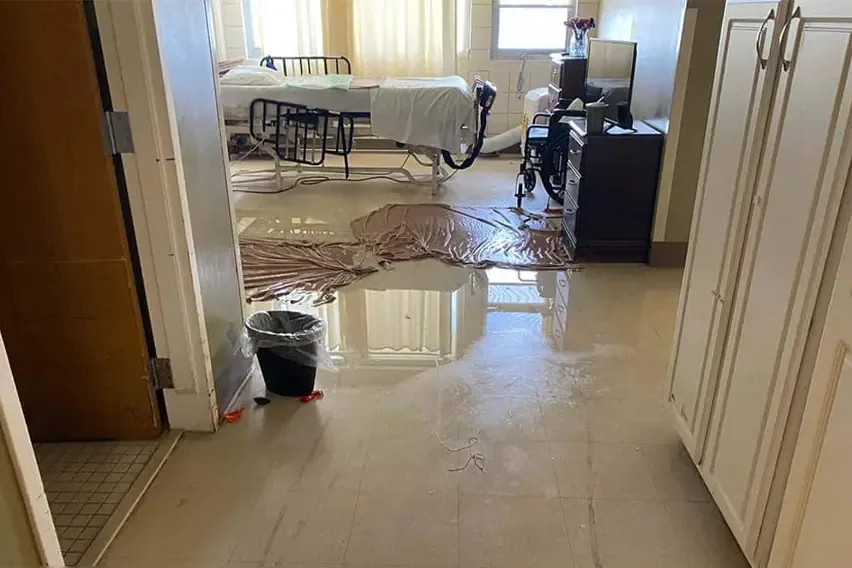
Creek and slope runoff does not behave like a leaking pipe. It carries soil, debris and whatever else it crossed on the way, so water that reaches the floor of a Wildomar home is treated as contaminated from the first minute. The steps below explain what to do, what to leave alone and what the cleanup involves.
Key takeaways
- Treat any creek or runoff water inside the house as contaminated, and keep children and pets out of it.
- Turn off electricity to wet areas only if it can be done safely from a dry spot; otherwise leave the house.
- Photograph the water line, the damage and the belongings before anything is moved.
- Soaked carpet, pad and drywall that touched runoff are usually removed, not dried in place.
- Drying is finished when readings match a dry reference, not when the surface feels dry.
Why runoff water is handled differently
Water from a creek, a slope or a street is classed as Category 3, the same grade used for sewage. It has been in contact with soil, animal waste, fertilizer and fuel, so it is not safe to wade through barefoot or mop up with household towels.
A clean supply pipe leak can often be dried in place. Runoff cannot, because the contamination soaks into anything porous it touches.
- Carpet and pad that sat in runoff are normally removed.
- Insulation and the lower part of drywall are cut out and replaced.
- Hard surfaces such as tile and sealed concrete are cleaned and treated, then dried.
- Furniture with fabric or particleboard parts is often a loss.
The creeks behind the water
Murrieta Creek runs through Wildomar, Murrieta and Temecula, and it meets Temecula Creek to form the Santa Margarita River. Several smaller streams feed it, including West Fork Murrieta Creek (also called Bear Creek), Cole Creek, Miller Canyon Creek and Linda Rosa Creek.
That system of channels matters to a homeowner because a lot of ordinary rain on canyon and hillside ground has to find its way into those channels. When the channels fill, runoff looks for the next low spot, and sometimes that is a driveway, a garage or a back door.
In March 2008 a Riverside County Flood Control and Water Conservation District report on the creek called flood control funding a critical priority in a booming region. That is a reminder that the whole watershed has been under pressure for a long time, long before the current wave of rain concerns.
First steps when runoff enters the house
The order of the first steps keeps people safe and keeps damage from spreading.
Before touching anything
Make sure everyone is out of the water. If the water is high enough to reach outlets or appliances, do not enter, and have the power turned off by a professional.
Look at the source. If rain is still falling and water is still arriving, stopping the entry point comes before cleanup.
- Move people and pets to dry rooms
- Do not use a household vacuum on standing water
- Keep children away from wet floors and mud
While waiting for help
Lift small valuables, papers and electronics onto dry counters. Leave heavy furniture where it stands unless it is safe to shift.
Take photos and short videos of the water, the damaged rooms and the items. These are the records that matter later.
- Photograph the high water mark on walls
- List damaged items with a short note on each
- Keep receipts for any emergency purchase
What the cleanup crew does
The first job is extraction. Truck-mounted pumps and wand tools pull the standing water and the slurry of mud and silt out of the rooms, which is also the point where water extraction matters most because any delay lets water wick into baseboards and framing.
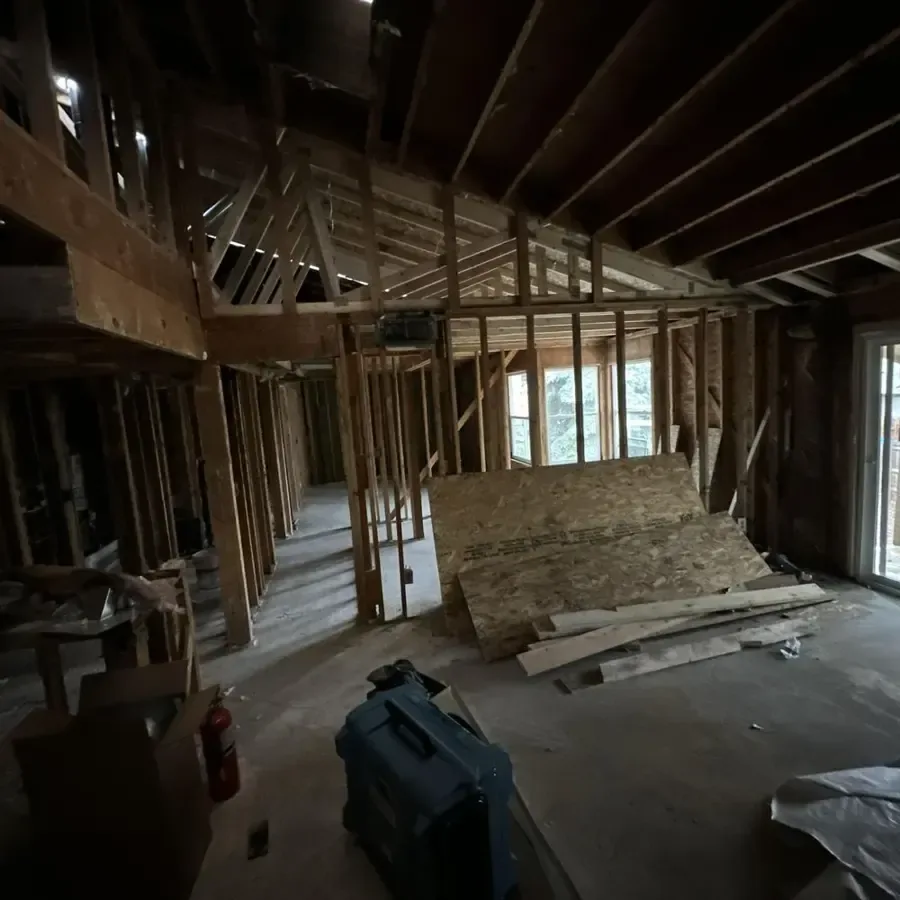
After extraction, the crew removes materials that cannot be cleaned and treats what stays. Then drying equipment goes in and runs until moisture readings match a dry reference point from an unaffected part of the home.
- Extract standing water and mud
- Remove soaked carpet, pad and cut drywall back to clean studs
- Clean and treat hard surfaces and framing
- Set air movers and dehumidifiers and log moisture readings
Where the water goes after the first day
Creek runoff pushes silt into corners, under cabinets and into wall bottoms. Cleaning only the visible floor leaves that silt behind, and it holds moisture long after the surface looks fine.
For homes near Murrieta, the same applies on the other side of the creek: flood water cleanup in Murrieta follows the same steps because creek water is creek water, whichever neighborhood it reaches. The Murrieta service pages list the full set of services for those homes.
- Ask for a moisture map of every wet room
- Ask which materials were removed and why
- Keep drying equipment running until readings match the reference
Common mistakes after a runoff event
Most extra damage after a runoff event comes from well meant shortcuts. A few of them come up again and again.
Running household fans over wet, muddy floors spreads fine silt through the air and pushes contaminated moisture into rooms that stayed dry. Using a standard vacuum on standing water is unsafe and ruins the machine.
- Wading through the water without boots and gloves
- Waiting for the surface to look dry before calling for help
- Washing mud into a storm drain or onto a neighbor's property
- Keeping soaked carpet and pad in place to save the flooring
- Skipping photos because the mess seems too obvious to need proof
Mud left behind
Dried silt is harder to remove than wet silt. It cakes onto tile grout, sits in baseboard gaps and holds moisture against the wall.
Moisture left behind
A wall can feel dry on the paint side while the cavity behind it is still wet. Moisture readings from inside the wall settle the question, not touch.
Questions to ask before work begins
A clear scope of work protects the homeowner and the crew. A few direct questions make that scope easier to get in writing.
- Which rooms will have materials removed, and which will be dried in place?
- How will moisture readings be recorded and shared?
- What happens to contents that cannot be cleaned?
- How will the work be sequenced so dry rooms stay dry?
Documentation and the insurance conversation
Insurance handling depends on the policy, and flood losses are often treated separately from other water losses. The most useful thing a homeowner can do is keep clear records.
Photos taken before cleanup, a list of removed items and the written scope from the restoration company are the three records that make a claim conversation smoother.
What to remember
Creek runoff is a contamination problem first and a moisture problem second. Fast extraction, removal of porous materials and verified drying are the sequence that protects the home.
For a full picture of how the process works for flooding, see flood water cleanup.
Questions
Is creek water in a house considered sewage?
It is graded in the same contaminated category, Category 3, because it carries soil and waste from outside. It is handled with the same protective steps even though it is not sewage.
Can wet carpet from runoff be saved?
Usually not. Carpet and pad that sat in contaminated water are removed, while hard flooring can often be cleaned, treated and dried.
Should the power be turned off?
Only if it can be done safely without standing in water. When in doubt, leave the house and have a professional shut off the power.
How do I know when the house is dry?
Drying is complete when moisture readings in walls and floors match a dry reference taken from an unaffected area. The surface feeling dry is not enough.
Which creeks are near Wildomar?
Murrieta Creek runs through the city, and its tributaries include West Fork Murrieta Creek, Cole Creek, Miller Canyon Creek and Linda Rosa Creek.