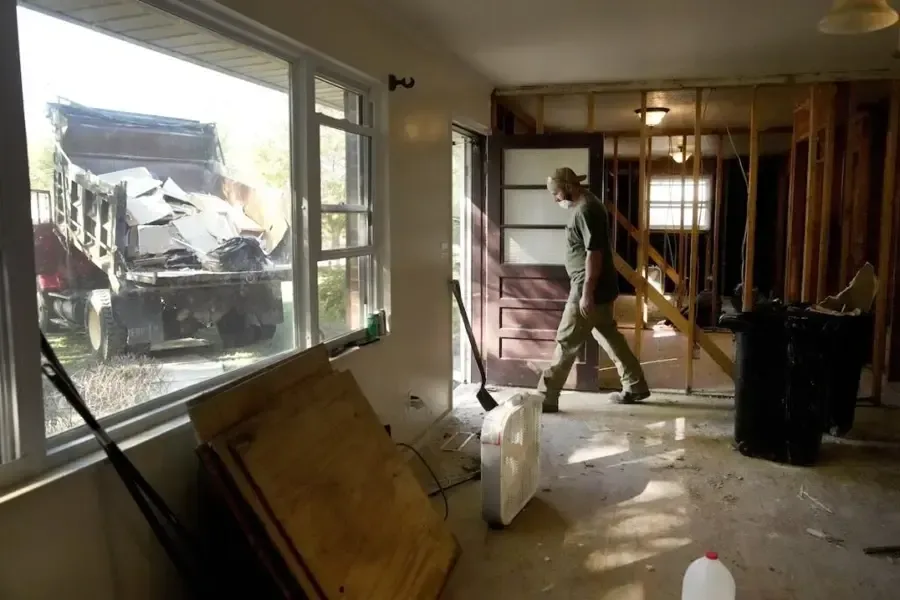
In February 2019 a rain-swollen creek in Lake Elsinore cut away land behind a home near the Holy Fire burn area. The storm shows how fast a quiet channel can turn into a threat, and how many different kinds of damage follow when it does.
Key takeaways
- A creek storm brings several problems at once: standing water, mud, debris and sometimes utility damage.
- If a gas smell or hissing is noticed, leave the house and call the utility from outside.
- Homes can be posted as unsafe by the city, so access and repairs may depend on an inspection.
- Mud and debris flow water is contaminated and needs removal of porous materials.
- Document the yard, the walls and the interior before cleanup begins.
What happened in February 2019
During the February 2019 storm, a creek in Lake Elsinore near the Holy Fire burn area swelled until it reached up to 10 feet deep and 100 feet wide. It eroded the land behind a home, and a neighbor's brick wall crumbled.
A natural gas pipe at a home snapped in the same storm. One house was red tagged as uninhabitable, and crews cleaned up mud and debris flows afterward.
Those details are worth reading closely, because each one points to a different cleanup task, not just one.
The several damages in one storm
A creek storm is rarely only about water. The list below shows how many separate problems a single event can create.
Water and mud inside the house
Runoff that crosses a threshold carries silt, which settles into floor edges, wall bottoms and cabinet bases. This is storm and flood water, and it is handled as contaminated.
- Water on flooring and in wall cavities
- Silt and mud under cabinets
- Wet insulation along exterior walls
Debris and failed walls
Fences, block walls and retaining walls fail when saturated soil pushes on them. A collapsed wall can open a path for even more water and mud.
Utility damage
When soil moves, buried pipes move too. A snapped gas pipe is an emergency before it is anything else.
- Gas smell: leave the house, then call the gas utility
- Water pipe breaks: shut the main valve if reachable safely
- Electrical panels near water: stay away
Red tags and what they mean for a household
A red tag means a home has been posted as unsafe to occupy. A home with a red tag cannot simply be cleaned and entered again; the posting has to be addressed first.
For a household that means planning for temporary housing, protecting belongings and getting the structure assessed before major repairs. Whether drying work can begin inside a posted house depends on the city's direction, so that conversation comes first.
Belongings and temporary housing
When a home is red tagged, daily life moves quickly to the question of where to stay and what to save. Contents from wet rooms can often be moved to dry rooms, cleaned and checked over later.
Keep a written list of what was moved and where. Photograph the items in place before they are carried out, since insurance conversations tend to focus on proof of what was lost.
- Photograph each room before anything is moved
- Set aside papers, medicine and documents first
- Keep receipts for hotel stays and emergency purchases
- Ask the restoration company how contents are handled and stored
Cleaning up a mud and debris flow indoors
Mud and debris flow does not drain away like water. It dries into a crust that locks silt and contaminants into flooring, wall bottoms and furniture legs.
Removing it takes shovels, wet vacuums and careful hand work first, then washing and treatment second. Rushing to dry the room before the silt is removed seals the problem inside.
- Remove loose mud and debris by hand and bag it
- Extract the remaining water and slurry
- Wash and treat hard surfaces and framing
- Take out porous materials that absorbed the water
How cleanup is sequenced
The process starts outside, because mud and standing water against the walls will keep feeding moisture into the structure. Then the interior steps follow in a strict order.
- Make the site safe and stop any active entry of water
- Pull standing water and slurry from interior rooms
- Remove soaked porous materials such as carpet, pad and lower drywall
- Clean and treat framing and hard floors
- Dry the structure with air movers and dehumidifiers and confirm with readings
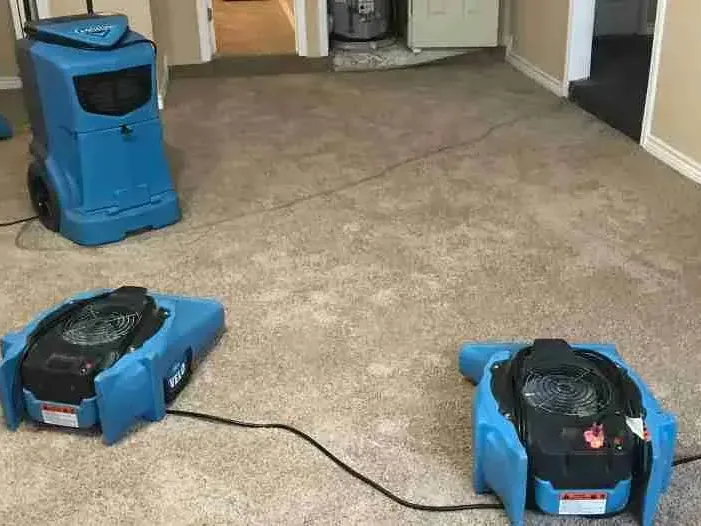
Where the local services fit
Rain driven loss of this kind falls under storm water damage when water arrives through doors, windows and walls, and under flood water cleanup when the water has risen from a creek or runoff and covered the floor.
The Lake Elsinore service pages show the full range of work available for homes here, and the main city page on storm water damage explains the same process for the neighboring area.
Questions to ask a restoration company
After a creek storm the scope of work can be large, so it helps to ask a few practical questions at the start. The answers show whether the plan covers inside and outside problems.
- Does the plan include the exterior areas where water and mud entered?
- Which materials are being removed and which dried in place?
- How will moisture readings be shared during drying?
- What steps are needed before the home can be occupied again?
Water district and utility contacts
Elsinore Valley Municipal Water District (EVMWD) is the local water district. If a water pipe is damaged inside the home, shutting the main valve is the first move.
The city is also organized into 11 districts, and a few of them have steep terrain and watercourses. Homes near those channels should expect runoff to arrive from higher ground faster than from the street.
Quick checklist for the next storm
A little preparation reduces the damage. Clear gutters, check where the yard drains and know where the main water valve is before the rain begins.
- Know where the water main valve is
- Keep photos of the home and yard in a safe digital folder
- Keep drains and swales clear of debris
- Keep a record of any wall or slope changes after a storm
Questions
What does a red tag mean?
It means the home has been posted as uninhabitable. The posting has to be resolved before people can live there again.
Is mud from a creek storm dangerous?
It can be. Mud and debris flow water carries contaminants, so porous materials that it touched are usually removed rather than cleaned.
What if a gas smell appears after a storm?
Leave the house right away and contact the gas utility from outside. Do not turn any switch or flame on or off.
Who handles a water pipe break?
The local water district is Elsinore Valley Municipal Water District. A home can shut off its own main valve while waiting.
Can cleanup start while the home is posted?
That depends on the city's direction. Ask about access before any crew enters a posted home.