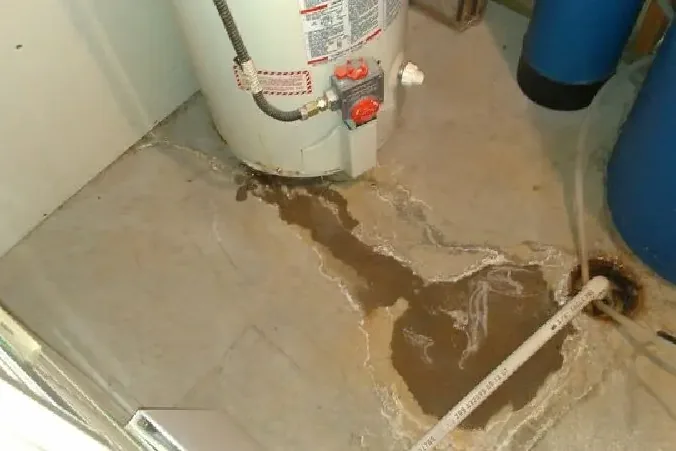
A water heater that starts leaking is a small emergency with a long tail. The first job is stopping the water, and the second is drying what it reached. Here the third job is often a permit, because replacing a water heater is work the city expects to be permitted.
Key takeaways
- Shut off the cold water supply to the tank and the power or gas control before anything else.
- Drain pans and nearby walls can hold water that cannot be seen from the floor.
- Local guidance says a building permit is needed to install or replace water heaters in Temecula.
- Permits run through the city's Citizen Self Service portal, and larger work can take 10 to 12 business days for an initial check of the plans.
- Dry the structure before the new tank goes in, so moisture is not sealed behind new finishes.
The first minutes at a leaking tank
Water heater leaks come in two sizes. A slow drip from a fitting is annoying, but a failed tank can release a full tank of water across a garage or closet floor.
The safest sequence is short and the same in either case.
A failed tank keeps draining until the supply is closed, so shutting the cold water valve is the one step that limits the volume of water. If that valve is stuck or cannot be reached safely, the home's main shutoff is the fallback.
Photos taken at this stage are useful later. They show the tank, the water and the items it reached before anything is moved.
- Turn off the electric breaker or set the gas control to off
- Close the cold water supply valve at the top of the tank
- Keep people away from standing water near outlets
- Photograph the tank, the pooled water and the surrounding items
Where the water actually goes
Water from a tank spreads in every direction at once. Most of it runs to low spots, but some wicks upward into drywall and sideways under flooring.
Garage installations
In a garage the water reaches stored boxes, the bottom of walls and the slab. Cardboard soaks it up fast, and drywall edges wick moisture a few inches above the floor.
- Cardboard and paper goods
- Bottom edges of drywall
- Door thresholds and baseboards
Closet and interior installations
Inside the house the same water reaches carpet, pad, cabinets and subfloor. These losses are harder to see because the moisture hides behind finishes.
- Carpet and pad in adjoining rooms
- Cabinet bases
- Subfloor under tile or wood
Drying steps after the water is out
Once the standing water is extracted, the structure still holds moisture. Drywall, baseboards and the framing behind them dry slowly on their own, and that is where hidden damage starts.
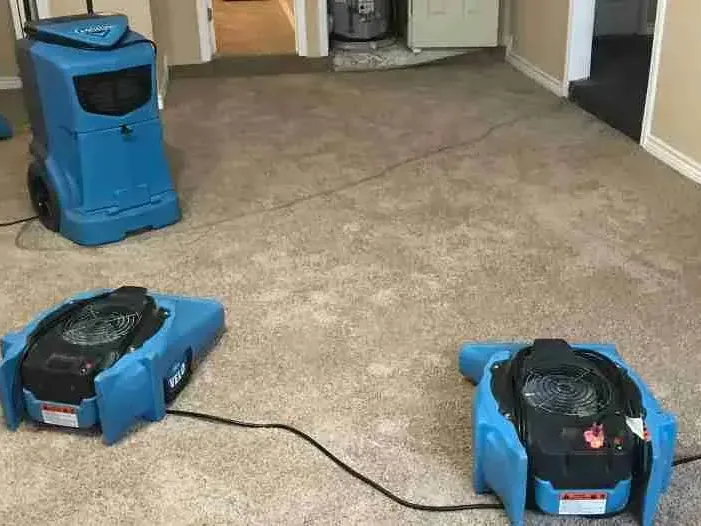
A drying plan places air movers and dehumidifiers, takes moisture readings and repeats them until the readings match a dry reference. The local page on water heater leak cleanup outlines how that work is done after a tank failure.
For leaks that went into walls and floors, structural drying is the longer part of the job and the part most worth verifying.
- Extract standing water first
- Remove wet insulation or drywall that cannot dry in place
- Run air movers and dehumidifiers with a written reading log
- Do not install new finishes until the readings match the reference
What gets measured
Moisture meters give a number for each material, and those numbers are compared with a dry reference from an unaffected part of the home. The goal is to reach that reference, not to make the surface feel dry.
Readings are repeated until the numbers stop falling. That log is the proof that the structure is dry before finishes go back on.
- Drywall and baseboard readings
- Subfloor and slab readings
- Air humidity in the drying area
The permit for a replacement tank
Local guidance says a building permit is needed to install or replace plumbing systems, water heaters or sewer lines in the city. Permits run through the city's Citizen Self Service portal.
The city's Building and Safety Division targets 10 to 12 business days for an initial check of the plans. Smaller, simpler jobs may move differently, so the portal and the division are the places to confirm the timeline for a given replacement.
The practical advice is to start the permit conversation while the leak is being dried. A replacement can then be scheduled once the area is ready.
Keeping the permit paperwork together with the photos of the leak gives a clean record for insurance and for any later sale of the home.
Replacement choices, such as a tank in the same spot or a tankless unit, are decisions for the homeowner and the installer. The permit covers new, altered or relocated work, so the plan should be clear before the application is filed.
The water district and leak checks
The Rancho California Water District is the water district serving the Temecula area. Its website has a leak information page with do-it-yourself tips, which is a useful starting point for checking whether a leak is on the home's side of the meter.
The district has also posted emergency shutdown alerts for main line leak investigations in Old Town Temecula. When service returns after a shutdown, it is smart to check the water heater area for drips, since pressure changes can expose weak fittings.
A short checklist for tank owners
A little attention to the tank prevents most failures from becoming floods.
- Know where the cold water shutoff is and that it turns
- Look for rust, moisture or small puddles at the base every season
- Keep stored items off the floor around the tank
- Place a drain pan under tanks in finished spaces
- Photograph the tank label and keep the paperwork
Signs a tank is failing
Tanks rarely fail without warning. A few small signs often show up first.
Catching one of these early turns a flood into a repair visit.
- Rust colored water or streaks near the base
- Small puddles or damp cardboard under the tank
- A hissing or dripping sound from fittings
- Corrosion on the supply connections
When to bring in a restoration crew
A small spill that is mopped up right away may not need professional help. A tank failure that soaks drywall, carpet or cabinets does.
The service pages list the services available, and the main city page on water heater leak cleanup explains the same process for nearby homes.
Garages in particular hide water. Boxes, tools and paper goods sit on the floor, and a tank leak can soak them while the main living areas stay dry.
Moving items out of the wet zone and onto dry shelves right away keeps a small loss from growing, while the drying crew works on the walls and floor.
Questions
Does Temecula require a permit to replace a water heater?
Local guidance says a building permit is needed to install or replace water heaters, plumbing systems or sewer lines in Temecula.
How long does the first plan check take?
The Temecula Building and Safety Division targets 10 to 12 business days for an initial check of the plans.
Where are permits filed?
Permits run through the city's Citizen Self Service portal.
What should be shut off first at a leaking tank?
The power or gas control and the cold water supply to the tank, in that order, before anyone goes near standing water.
Can a water heater leak be dried without removing drywall?
Sometimes. It depends on how long the wall was wet and what the moisture readings show.