In April 2020 a rain storm and a failed underground pipe took out part of the Alta Murrieta Drive roadway in a sinkhole. The same pipe had leaked a year earlier. The story is a public one, but the lesson about a slow leak that comes back is just as true for a home.
Key takeaways
- A leak that was fixed once can fail again, and a repeat break is often larger.
- Signs of a hidden burst pipe include sound, damp spots and a rising water bill.
- Shut off the main valve first, then extract water and open wet cavities.
- Plumbing work here needs a permit through the city Building Department.
- Dry wall cavities and subfloors fully before repairs are closed up.
What happened at the sinkhole
On April 11, 2020, a rain storm caused a failed underground pipe to leak, and a large part of the roadway collapsed into a sinkhole.
The same failed pipe had leaked in 2019 further upstream and caused an earlier sinkhole. On April 21, 2020, the Murrieta City Council ratified a $350,000 replacement using a 72-inch concrete pipe.
The numbers show the scale of a public failure, but the pattern is familiar: a leak that was repaired once returned, and the second failure was bigger.
Public pipes and private pipes are different systems, but they share the same weakness: water finds the point that failed before and uses it again.
What the story means for a home
A home has its own set of buried and hidden pipes. Supply pipes run through slabs, walls and attics, and drain pipes run under floors.
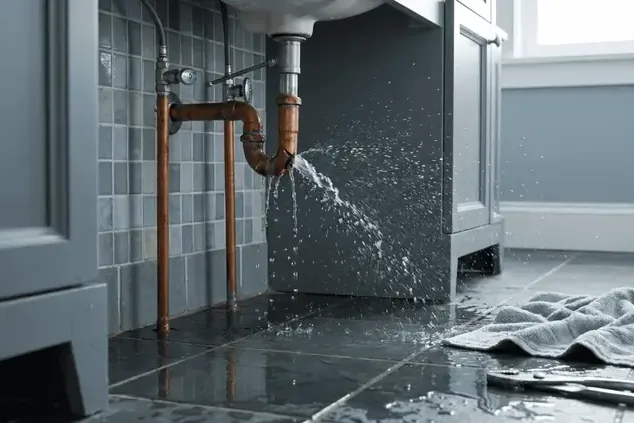
A small leak from a corroded fitting or a pinhole can run for weeks without a visible puddle. When it fails completely, the result is a burst pipe, and the damage spreads quickly.
Why repeat leaks happen
Repairing a pipe at one spot does not change the condition of the rest of it. A second failure nearby is common, since the weak spot that failed once is rarely alone.
Why storms can trigger a failure
Heavy rain saturates soil, shifts ground and adds load around buried pipes. A weak pipe can fail when the ground around it moves.
Older neighborhoods
Much of Alta Murrieta was built in the late 1980s and 1990s with older floor plans and tract homes. The Colony is a 55-plus guard-gated community where some homes still have 1990s finishes.
For homes of that vintage, older in-ground plumbing is worth checking. Foundation type varies by home, so a plumber or inspector is the right person to say what is under a given floor.
Signs of a burst or leaking pipe
Most burst pipes announce themselves in a few ways. A homeowner who knows the signs catches the leak sooner.
A simple meter check helps. Turn off every tap and appliance, look at the water meter, and see whether it still moves.
A moving meter with everything off points to a leak somewhere in the pipes.
Not every leak shows on the surface. Water inside a wall cavity can travel along studs and drop out of sight, so a stain may appear far from the break.
- Sound of running water when nothing is on
- A water bill that jumps without a reason
- Damp, stained or bubbling drywall
- Warm spots or wet patches on a floor
- Low water pressure that seems new
The first steps when a pipe lets go
The order of steps matters. Stopping the water comes before anything else, since each minute adds more to the wet area.
Then the focus moves to what the water reached and how fast it can be pulled out.
If the break is in a ceiling, the water often shows up first as a stain or a drip in a room below. In that case do not poke at the stain, since a pooled ceiling can release a lot of water at once.
Stop the water
Shut the main valve and open a low faucet to drain the pipes. Turn off power in the wet area if it can be done safely.
- Locate the main shutoff before there is an emergency
- Open the lowest faucet to relieve pressure
Extract and open up
Standing water is pulled out first, using water extraction. Then wet drywall, insulation and flooring are checked and opened where needed.
- Cut a small opening to inspect the wall cavity
- Remove wet insulation
- Lift flooring that holds water
Drying and repair
A repaired pipe on top of a wet wall is a half fix. Moisture stays in the cavity, and later problems follow.
The page on burst pipe water damage page explains how the damage is removed and dried. The main city page on burst pipe water damage covers the same process.
The drying crew uses the same readings for walls, cabinets and subfloors that it would for a storm loss. The difference with a pipe break is that the water is usually clean at the start, so more material can often be saved when action is fast.
Delay changes that. Clean water that sits long enough picks up contaminants from building materials, and the repair grows.
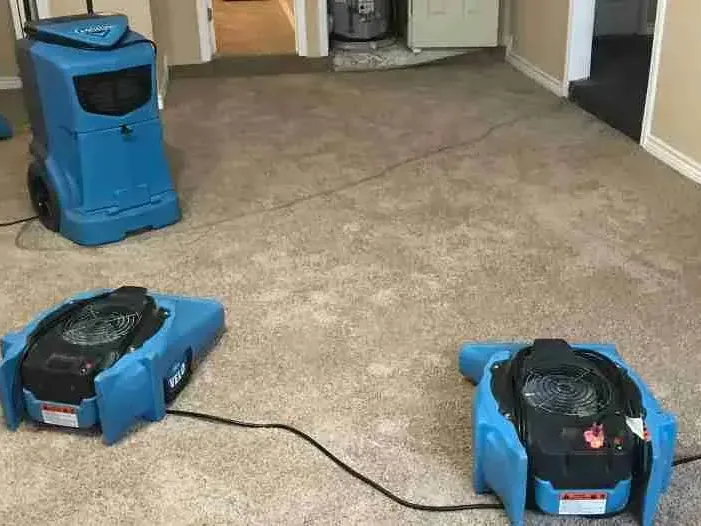
- Air movers and dehumidifiers run until readings match a dry reference
- Wall cavities are checked, not just wall surfaces
- Subfloors and cabinet bases are tested
- Repairs are closed up only after dryness is confirmed
Permits and the city
Plumbing, electrical and mechanical work in the city requires a permit, handled by the city Building Department. The online permitting system launched on March 1, 2023.
The Murrieta Public Works/Engineering Division issues storm drain and grading permits. That is a different task from a pipe repair inside a home, but it shows how the city divides the work.
The city also offers a way to handle water heater permits through the same online system. Anyone replacing a failed pipe section or a fixture should confirm with the Building Department which work needs a permit.
Water agency details
Which water agency serves an address here varies, so customers should check their own bill. Western Municipal Water District and Eastern Municipal Water District both operate in the area.
The service pages explain the work available for homes across the city.
Questions
What happened on Alta Murrieta Drive?
On April 11, 2020, a failed underground pipe leaked during a rain storm and part of the roadway collapsed into a sinkhole. The same pipe had leaked in 2019.
What did the replacement cost?
On April 21, 2020, the City Council ratified a $350,000 replacement using a 72-inch concrete pipe.
Does plumbing work need a permit in Murrieta?
Plumbing, electrical and mechanical work requires a permit handled by the city Building Department.
How can a hidden leak be found?
Listen for running water, check the water bill for jumps and look for damp or stained drywall and warm floor spots.
Who provides water to a home here?
It varies by address, so the water bill is the best source.
How can a meter test show a hidden leak?
Turn off all taps and appliances, then watch the water meter. If it keeps moving, water is running somewhere in the pipes.