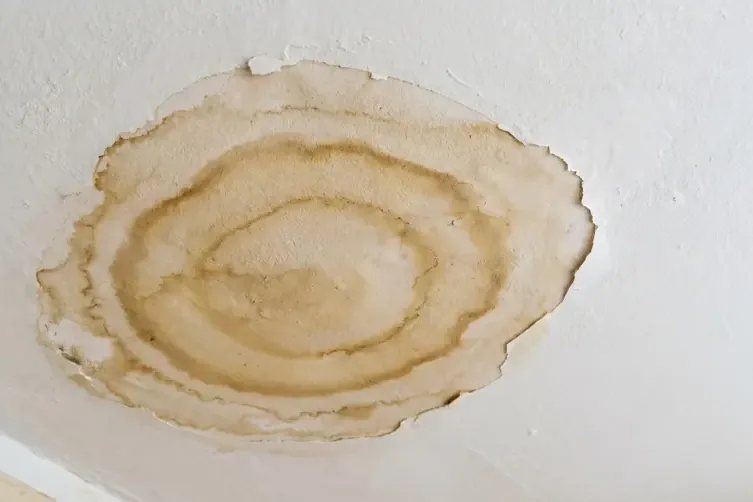
Menifee summers are hot and dry, and air conditioners run for months. An AC unit pulls moisture out of the air as it cools, and that water has to go somewhere. When the drain clogs, the pan fills and water ends up in the ceiling.
Key takeaways
- A clogged condensate drain or a full pan sends water into ceilings, walls and closets.
- April through October is hot and dry here, with summer temperatures that can top 105 degrees.
- Stains, drips and musty smells near the air handler are early signs.
- Turn the system off when overflow is seen, then call for drying before the ceiling sags.
- HVAC repairs may qualify for the city's Fast-Track permit process.
Where the water comes from
An air conditioner cools the air by running it across a cold coil. Moisture in the air condenses on the coil and drips into a pan, then flows out through a drain pipe.
When the drain clogs with algae, dust or debris, the water backs up. The pan fills, and then it spills into whatever sits below.
The pan and the drain pipe are the two parts that matter. The pan catches water that drips off the coil, and the pipe carries it to a safe place outside or to a plumbing connection.
Many units in attics also have a secondary pan or a safety switch that shuts the system off when water rises. If that switch fails or was never installed, overflow goes unnoticed.
Heat and the workload on a system
Menifee has a dry-summer subtropical climate. April through October is hot and dry, and summer temperatures can top 105 degrees.
During a long hot season a system may run for most of the day, which means a lot of condensate. A drain that was barely flowing in spring can fail in July.
Households here use the system hard from spring into fall, so drain care is a seasonal job, not a one time task.
Why summer is when it fails
Longer run times mean more condensate. A drain that was partly clogged in spring gets the most flow in midsummer and clogs fully.
A system serviced in late spring has the best chance of getting through the season without an overflow.
- Algae growth in a warm, damp drain pipe
- Dust and debris carried into the pan
- Pans that rust through after seasons of water
- Units tilted slightly the wrong way
Signs of a drain problem
Most overflows give warnings before they cause damage. The signs are easy to check on a monthly walk around.
Check the spots most often missed. Attic units are out of sight, and the first sign of a leak is often a stain on the ceiling below.
Closet units can leak into the wall behind them.
- Water stains on a ceiling near an attic hatch or closet
- Drips or dampness around the air handler
- Musty smell near the unit
- A drain pan holding water that does not drain
- The system shutting off by itself
What to do when overflow starts
The first moves are short and apply whether the unit is in an attic, a closet or a garage.
Stop the cause
Turn the AC off at the thermostat and, if possible, at the unit. Running it adds more water.
- Switch the thermostat to off
- Do not open a sagging ceiling over a person
Contain and document
Place buckets or towels, move belongings and photograph the stain and the unit. The photos help with repairs and with insurance.
- Photograph the stain and the unit
- Move furniture and valuables
- Note when the stain first appeared
Protect the structure
A ceiling holding water can sag and let go without warning. If a stain is spreading and the drywall looks swollen, stay out from under it and keep others away.
A small hole in the lowest point can let the water drain into a bucket in a controlled way.
What the repair looks like
Fixing the drain is a job for an HVAC technician. Drying the structure is a job for a water damage crew.
The local page on AC drain leak water damage explains what the restoration side involves. The main city page on AC drain leak water damage covers the same work.
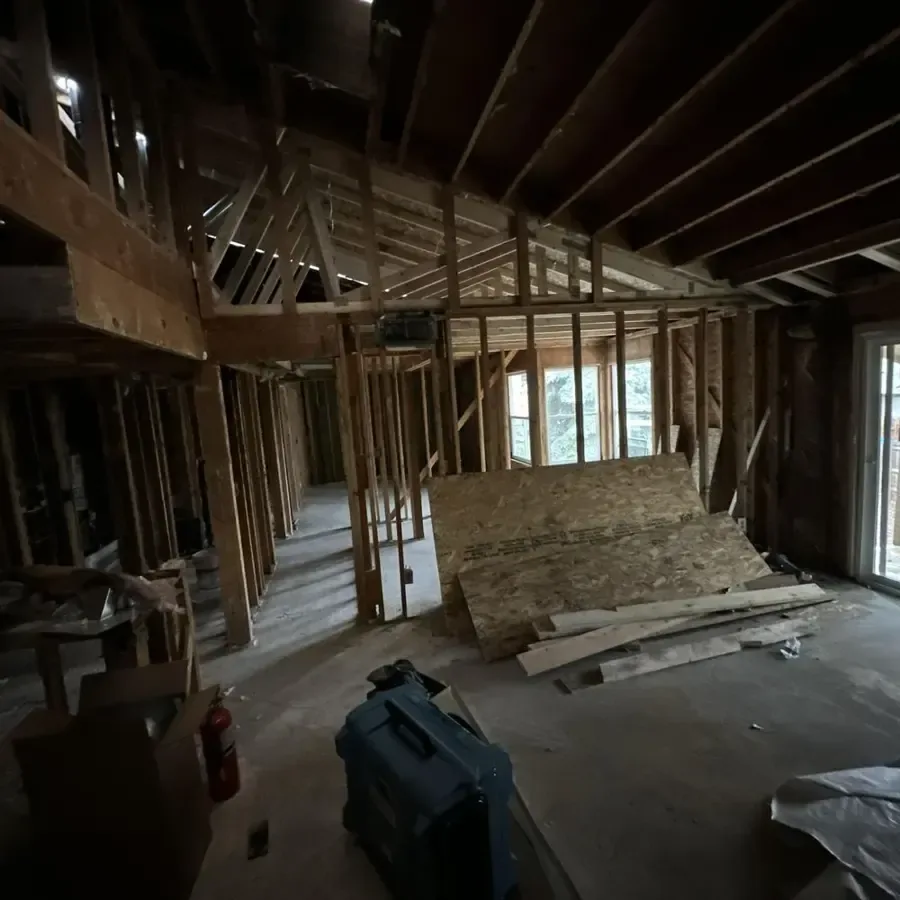
Drying an attic ceiling includes insulation. Wet insulation loses its value and holds moisture against the drywall, so it is normally removed and replaced.
The restoration crew also checks the walls beside the unit. Water travels along framing, and a dry ceiling does not mean the wall is dry.
- Extract standing water from pans and floors
- Remove wet insulation and sagging drywall
- Dry the cavity with air movers and dehumidifiers
- Verify dryness with readings before closing up
Permits and HVAC work
Building permits here go through the Menifee Permit Portal, and inspections are scheduled there too. Fast-Track permits, which cover HVAC and water heaters and minor plumbing work, skip the full plan check and are typically processed within two business days.
That helps when a unit has to be repaired or replaced quickly in the middle of summer. Details of what qualifies are on the portal.
Menifee has housing from several eras, including early 1960s Sun City homes, late 1980s and later master-planned tracts, and tracts still being built. Equipment age varies across that mix, which is one reason to inspect rather than assume.
Eastern Municipal Water District provides water, wastewater and recycled water service to retail customers here.
Seasonal habits that help
A little care before the hot months and again at midsummer prevents most overflows.
See the service pages for the work available.
Setting a reminder on the calendar for the start of May and again in midsummer takes seconds and avoids a repair that can reach into the thousands of dollars once a ceiling is involved.
Households that rent should tell the landlord at the first sign of a stain, since the unit and the drain are usually the property owner's to repair.
- Have the drain flushed before the season starts
- Check the pan monthly
- Replace filters on schedule
- Keep the area around the unit clear
Questions
Why does an AC unit leak water?
It pulls moisture from the air and drains it away. If the drain clogs, the pan overflows.
How hot does Menifee get in summer?
Summer temperatures can top 105 degrees, and April through October is hot and dry.
Should the AC be left running when it leaks?
No. Turn it off, since running it adds more water.
Is there a quick permit for HVAC work?
Fast-Track permits cover HVAC and water heaters and minor plumbing work, and skip the full plan check.
Who fixes the drain and who dries the ceiling?
An HVAC technician fixes the drain. A water damage crew extracts and dries the structure.
Who is the water provider in Menifee?
Eastern Municipal Water District provides water, wastewater and recycled water service to retail customers in Menifee.