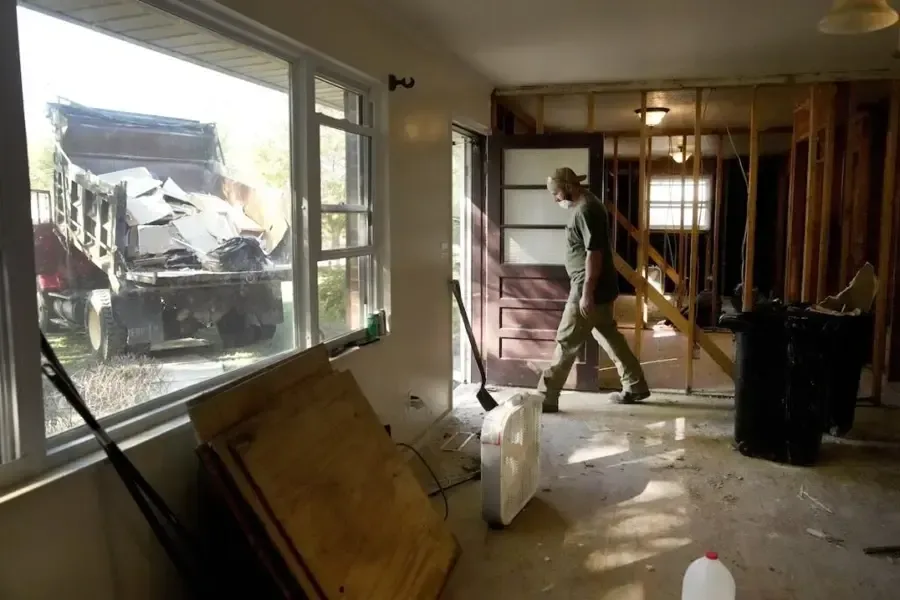
Salt Creek crosses Bradley Road in Menifee, and the road floods at the creek often. A road that closes for rain is a useful signal, because the same ground and the same storms also push water toward nearby homes, garages and yards.
Key takeaways
- Road closures at Salt Creek show how quickly small storms overwhelm local channels.
- Garages and ground-floor rooms are the first places storm water reaches in a house.
- Standing water should be extracted quickly, before it wicks into drywall and framing.
- Document water lines and damaged items with photos before cleanup.
- The rainy season runs from November to March, so preparation belongs in the fall.
What the road closures show
The old Bradley Road crossing was a culvert with two 30-inch concrete pipes that a small storm could overwhelm. In December 2016, crews shut Bradley Road at Salt Creek for nearly 11 hours because of flooding.
City officials later chose a bridge over Salt Creek instead of bigger culverts, designed for a once-in-100-years storm. Murrieta Road is also susceptible to Salt Creek flooding, though less often than Bradley Road.
The point for homeowners is not the road itself. It is that a channel this small can fill fast, and water that cannot pass will spread across the land beside it.
More recent rain
On February 6, 2024, the city closed Bradley Road at Salt Creek, Murrieta Road between Park City Avenue and Cam del Sol, and Normandy between La Ladera Road and Berea Road for rain and flooding.
On September 8, 2024, city crews handled flooding and downed trees in the northeast area during a severe weather event, and Southern California Edison responded. Those events show that storm damage in town is not limited to one corner of town.
Sun City lies north of Salt Creek and has many senior residents, so closures at Bradley Road affect emergency routes. For a household in that area, planning ahead for blocked roads and for a quick exit matters as much as the home itself.
Households with limited mobility often cannot move belongings or carry equipment, so having a plan with a neighbor or family member in advance helps. When water does get inside, early help keeps the cleanup smaller.
Taken together, the closures from 2016 to 2024 give homeowners a practical calendar of when water has outrun the local channels, and when to expect it again.
Climate in numbers
Menifee has a dry-summer subtropical climate with about 35 days of measurable precipitation and 12.51 inches of rain a year. April through October is hot and dry, and November through March is the rainier season.
A dry climate can lull homeowners into skipping preparation. The fall is the best time to check gutters, door sweeps and grading, before the rainy months begin.
- Clear gutters and downspouts
- Check that the ground slopes away from the foundation
- Replace worn door sweeps
- Move stored items off garage floors
A simple pre-season walk-through
Walk the outside of the house in the fall and look for low spots, cracked caulk around doors and gutters that spill near the wall. Fix the small things before the rainy months, since a wet week is a poor time to start.
Check inside too. Look at garage walls, baseboards and the ceiling below any bathroom for stains that show earlier leaks.
Garage first: protecting what is stored there
Garages are the front line in many local storms. Boxes of paper, holiday decorations and tools often sit directly on the slab, so a thin film of water ruins a lot of belongings fast.
Raising stored items onto shelves or plastic bins before the rainy months costs little. Cardboard on a wet floor will wick water upward within a short span, so it is the first thing to move.
- Shelve boxes at least a few inches off the slab
- Use sealed plastic bins instead of cardboard
- Keep paint and chemicals sealed and off the floor
- Check the door seal before the first storm
How storm water gets into a house
Storm water enters in several predictable ways. Knowing them helps with both prevention and cleanup.
Through the garage
Garage doors seal poorly against fast moving water. Stored boxes, cardboard and drywall edges wick moisture quickly.
- Cardboard storage soaks up water
- Drywall lower edges wick upward
- Water can spread into adjoining rooms
Through doors and windows
Driven rain and ponding at entries finds gaps around thresholds and frames, and water travels behind baseboards.
From the yard
When the ground is saturated, water can seep along foundations or through low openings.
Cleanup steps after a storm
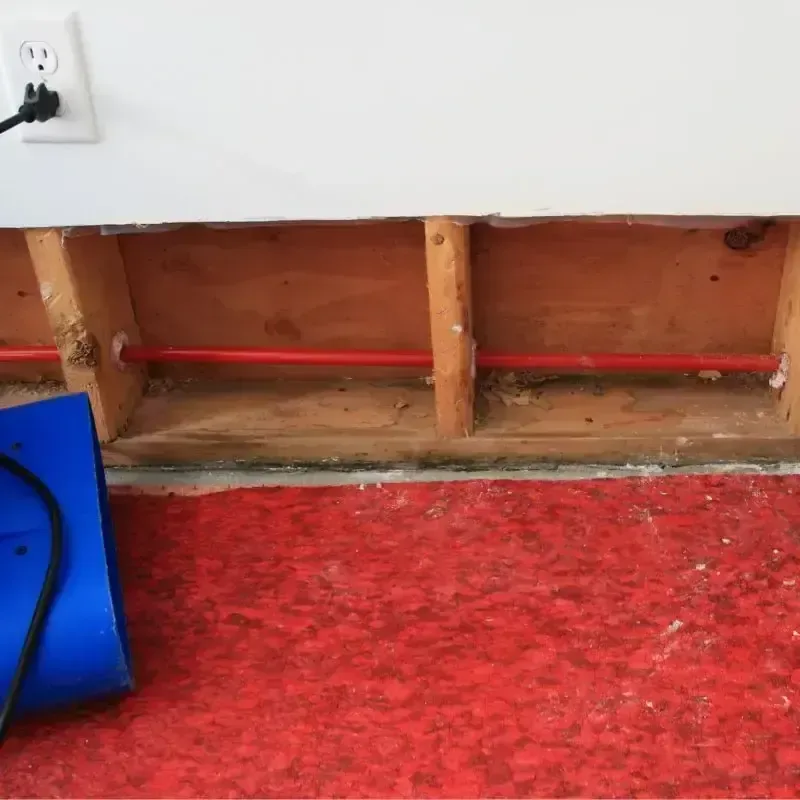
The first priority is removing standing water, since every day it sits makes the repair larger. A pump or wand extractor does the heavy work, and the matching service page on storm water damage explains what happens next.
Then wet materials are removed or dried in place, depending on what the water carried. Storm water that came over the ground is usually treated as contaminated, so soaked carpet and pad are often removed.
- Extract standing water
- Remove materials that cannot be cleaned
- Dry framing and subfloor with air movers and dehumidifiers
- Verify dryness with moisture readings
Questions to ask after a storm loss
Cleanup choices made in the first days shape how large the repair becomes. A few direct questions help.
- How will the crew know that drywall and subfloor are dry?
- Which items in the garage can be cleaned and which cannot?
- How will wet insulation along exterior walls be handled?
- What documentation will be kept for insurance?
Why extraction speed matters
Wicking begins immediately. Water climbs drywall, pad and baseboards, and the longer it stays the more material has to be replaced.
Details about the method are on the local page for water extraction.
Homes across the city, from Sun City to Quail Valley, face the same basic rule. Fast extraction keeps a small loss small.
The Menifee service pages cover every neighborhood.
Records worth keeping
After any storm, photograph the water line and each damaged room. Keep a short list of items affected.
These records help when talking to an insurance company, and they help the restoration crew plan the work.
Questions
How often does Salt Creek flood Bradley Road?
The road floods at the creek often. In December 2016 it was closed for nearly 11 hours, and it was closed again on February 6, 2024.
Is storm water in a garage dangerous?
It can be contaminated by soil and chemicals stored in the garage. Boxes, cardboard and drywall edges absorb it quickly.
When is the rainy season in Menifee?
November through March is the rainier season. April through October is hot and dry.
Should wet carpet be saved after a storm?
Carpet that took in storm water that crossed the ground is usually removed, because the water carries contaminants.
What should be photographed after a storm?
The water line on walls, every damaged room and each affected item, before any cleanup begins.