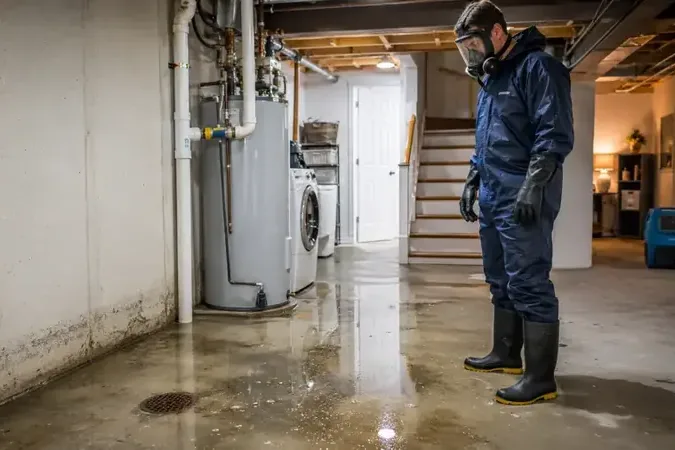
Sewage that comes up through a tub, toilet or floor drain is contaminated water, and it needs a different response from a leaking pipe. The questions are the same every time: where is it coming from, who needs to know and what has to be removed.
Key takeaways
- Sewage is Category 3 water and is a health hazard from the first moment.
- Stop using water in the house, since every flush or shower sends more into the backup.
- Check whether neighbors have the same problem; it can show if the issue is in the shared sewer.
- Porous materials that touched sewage are removed, not dried.
- Elsinore Valley Municipal Water District is listed by the city as the water and sewer provider.
Why a sewage backup is a hazard
Sewage contains bacteria, viruses and parasites. Contact through skin, mouth or eyes can cause illness, and the contamination does not stay on the surface.
Carpet, pad, drywall and upholstered items absorb it quickly. This is why a sewage loss is classed as Category 3 and handled with protective equipment.
Even a small backup carries risk. Moisture and organic material together give bacteria what they need to multiply, so speed matters.
Anyone with a weak immune system, a recent surgery or an open cut should stay away from the area entirely while the cleanup is under way.
- Keep children, older adults and pets out of the area
- Do not touch the water with bare hands
- Do not run fans that spread contaminated air
- Do not use a household vacuum
First steps in the first moments
The first priority is limiting how much water enters the house and keeping people out.
Stop adding water
Stop flushing, showering and running the washer or dishwasher. Every drain in the house feeds the same pipe, so water used anywhere can end up on the floor.
- No flushing
- No laundry or dishwasher cycles
- Arrange a neighbor's bathroom for essential use
Check the scope
Look at which drains are affected. A backup at the lowest drain, such as a floor drain or the lowest tub, often points to a blockage further along the pipe.
- Is more than one fixture affected?
- Is water coming up from a floor drain?
- Do neighbors report the same problem?
Protect the rest of the house
Close doors to the affected room and place towels at the threshold to slow the spread. Do not walk through the water and then through clean rooms, since shoes carry contamination.
Keep pets and children out, and leave heavy cleaning to people with protective equipment.
- Close the door of the affected room
- Take off shoes before leaving the area
- Wash hands with soap and water, not with sanitizer alone
Working out where the problem sits
Not every backup is the same. Some are blockages inside the house, and some are in the pipe that serves several homes.
The city's utilities page lists Elsinore Valley Municipal Water District for water and sewer. A homeowner who suspects a problem on the utility side can contact the district and ask what it sees in the area.
Who maintains the pipe between the house and the main is a question for the homeowner's paperwork and the utility, and it should be confirmed rather than assumed.
Questions to ask the utility
A call to the utility is quick and often useful. A few clear questions get a better answer.
- Are there other reports of backups in the neighborhood?
- Is there a known blockage or maintenance work nearby?
- Who is responsible for the pipe that serves the home?
- What records should be kept for a claim?
What the cleanup involves
The goal is to contain the contamination, remove what cannot be cleaned and make the rest safe. The page on sewage backup cleanup explains the sequence used for homes here.
Not everything is thrown out. Hard surfaces such as tile, sealed concrete and some framing can be cleaned and treated.
Porous items are replaced.
A written scope helps. It lists the rooms, the materials removed and the treatment used, so the homeowner and any insurer can follow what was done.
- Contain the area and protect clean rooms
- Extract the contaminated water
- Remove carpet, pad and affected drywall
- Clean and treat framing and hard surfaces
- Dry and verify with moisture readings
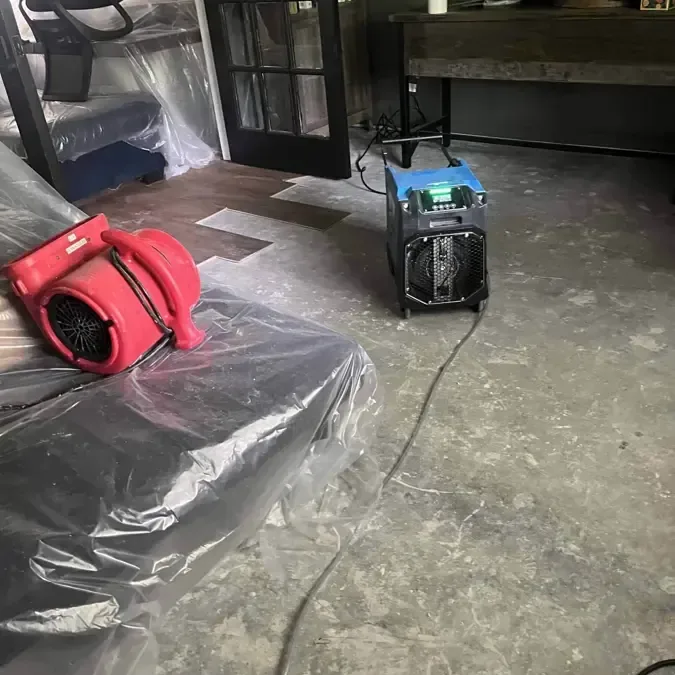
Drying after the cleanup
After contaminated materials are removed, the structure still holds moisture. Structural drying sets air movers and dehumidifiers and tracks readings until they match a dry reference.
Skipping this step leaves damp framing under new finishes, which is where later problems begin.
Drying is the step most often cut short. A crew that logs readings each visit and shows them to the homeowner gives proof that the structure is dry.
Local context for Wildomar homes
Wildomar became a city on July 1, 2008, and sits between Murrieta and Lake Elsinore. Interstate 15 bisects the city, and the population grew from 14,064 in 2000 to 32,176 in 2010.
The 2010 count showed 10,806 housing units, with 73.3 percent owner-occupied. Wildomar Municipal Code Chapter 15.32 adopts the 2025 California Plumbing Code, which sets the rules for plumbing work in the city.
Utilities in the area include Elsinore Valley Municipal Water District, Southern California Edison and SoCalGas.
For households on the Murrieta side of the boundary, the page on sewage backup cleanup in Murrieta describes the same containment and removal steps, because the contamination risk does not change at a city boundary.
Knowing the code and the utility names helps when talking with a plumber or the district about repairs.
Records and next steps
Take photos before cleanup starts. Note the time the backup began and which fixtures were affected.
Keep notes on who was contacted and when. These records help with insurance conversations and with the utility.
Contents are part of the record. Photograph items before they are moved, and list anything that has to be discarded.
Insurance coverage for sewage backups depends on the policy, and some policies treat it as an add on. Reading the policy early avoids surprises.
- Photos of every affected room
- A list of removed items
- Names and dates of calls to the utility and the restoration company
Questions
Is a sewage backup an emergency?
Yes. Sewage is contaminated water and should be treated as a health hazard right away.
Can sewage-soaked carpet be cleaned?
Usually not. Porous materials that absorbed sewage are removed and replaced.
Who provides sewer service in Wildomar?
The city lists Elsinore Valley Municipal Water District for water and sewer.
Should water use stop during a backup?
Yes. Stop flushing and running water, since every drain feeds the same pipe.
What plumbing code applies in the city?
Wildomar Municipal Code Chapter 15.32 adopts the 2025 California Plumbing Code.
When can the room be used again?
After contaminated materials are removed, the area is cleaned and treated and the structure is dried to match a dry reference.